

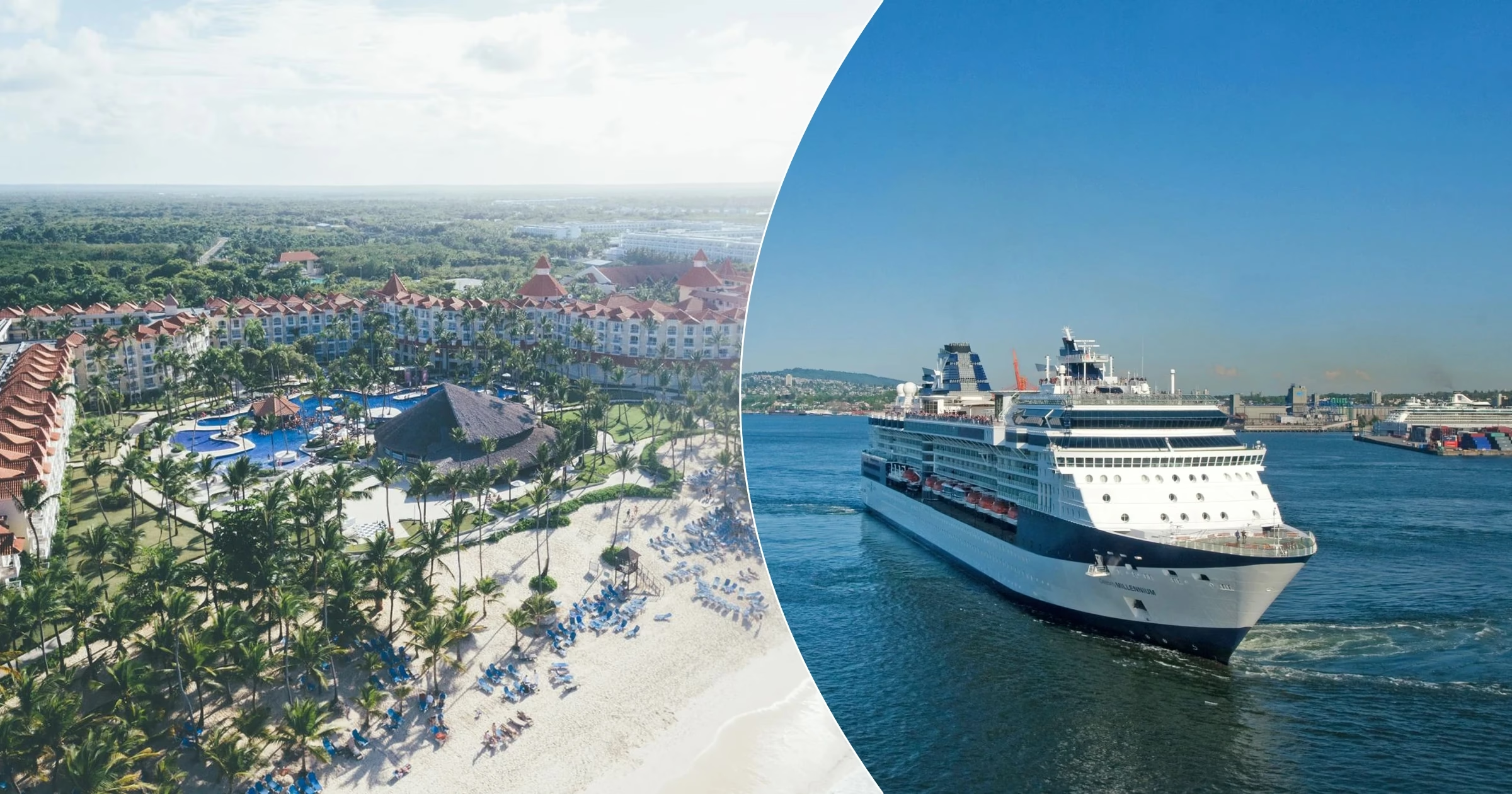
I've done all-inclusive resorts for years and I'm thinking about a first cruise. What changes, and will I wish I'd booked what I know?
A cruise and an all-inclusive resort are different holidays, not better and worse versions of one. A resort is one place you settle into for a week. A ship trades that for several places a day, where going ashore is built into the week rather than paid for separately. Neither is reliably cheaper. Stay with the resort if your ideal week is the same beach every morning. Try the cruise if you'd rather sample several places, which also lets you find the one to return to properly next winter.
By the third morning of a resort week, you know the place. Which pool has shade after two o'clock, which of the restaurants is worth booking and which to skip, how long the walk to the beach is. That knowledge is a good holiday running smoothly, and it's built on one location you chose with care.
A ship offers the opposite arrangement. Instead of one place learned deeply, the week holds several places, each for a day, and you wake up somewhere new most mornings. Going into that somewhere isn't an excursion you decide on and pay for. It's what the day is. That's a different kind of holiday, and the fair question is whether the trade suits the week you already like having.
A cruise also does something a resort week can't. A week that touches four islands lets you find the one worth returning to properly, for a week, next winter. So the choice isn't only between two holidays. It's a way to pick your next resort.
The two kinds of week
An all-inclusive week
One place, learned by the third day, and often nonstop from a Canadian city. Drinks are in the fare by default, and leaving the grounds is a trip you decide on and pay for. It suits a week where the same beach, done well, is the point.
A week on a ship
A new place most mornings, with going ashore built into the day rather than bought separately. Getting there usually means a US connection and a night before, and drinks become a decision you make aboard. It suits a week where you would trade a full beach day for a new town most mornings.
| What you know from a resort | What a ship does differently | |
|---|---|---|
| Shape of the week | One place, learned by day three | A new place most mornings |
| Getting there | Often nonstop from your city | Usually a US connection and a night before |
| Leaving the grounds | A trip you decide on and pay for | Built into the day, every port |
| Drinks | In the fare by default | A separate decision aboard |
| Tips | Left to you | An automatic daily charge |
| The room | Somewhere to change and sleep | Smaller, and used differently |
| Motion | The ground stays put | Large, stabilized, varies by cabin |
| A slow day | The best day for some | A sea day: loved or wasted |
Shape of the week
Getting there
Leaving the grounds
Drinks
Tips
The room
Motion
A slow day
What a ship changes, point by point
A sun-destination resort is often a nonstop flight from a Canadian city, and which cities have that nonstop differs sharply between Toronto, Montreal, Calgary, Vancouver, Ottawa, Halifax and Winnipeg. You leave home in the morning and you're at the property by dinner. The trip there is a travel day, and only one.
Most Caribbean ships leave from Florida or another US port. That usually means a connection through the United States and a night in the departure city before you sail, because you can't risk a delayed flight against a ship that leaves without you. Set aside a spare day and some arranging that a resort trip never needed.
You settle in. By the third day you know the shortcuts, the staff know your order, and the week has a rhythm you don't have to think about. If your favourite holiday is the same lounger every morning and a beach you stop noticing you chose, a resort gives you seven full days of exactly that.
The ship moves overnight, so the week is several places instead of one, each for a day. That's the appeal, and it's also the honest warning: no single stop gives you its whole day. Each one runs on the ship's clock, and you're due back aboard by late afternoon. If your best holiday is settling onto a single beach and staying put, this trip is built to do the reverse, and it does it on purpose.
Leaving a resort costs extra and takes arranging, and plenty of guests never bother. The grounds are designed as a bubble, and much of what you're paying for is that they're a good one. A day trip into town is an outing you arrange for yourself.
A ship brings the destinations to you. Skip every excursion and you still step off into a new place each morning, because that's the shape of the day. It sets you down in a working town among people going about their ordinary day, which a resort by its nature keeps at a distance. It's also how a ship earns its other job: see four islands in a week, then book the one you liked best as a resort week next winter.
You already know to book the good restaurants the morning you arrive, before the week fills up. That instinct is worth keeping. A resort feeds you from a fixed set of rooms, the buffet and a handful of sit-down restaurants, and by midweek you know the rotation.
The same habit carries across, with one change: on a ship, reservations open and fill on a timeline that varies by line, so book early and confirm how early once you're aboard. There are more places to eat, and the cooking changes through the week rather than repeating. Some of the best rooms cost extra, the same way they can at a resort.
At an all-inclusive, drinks are in the rate. You don't think about a bar tab because there isn't one, and tipping is left to you to handle as you like. That single fact shapes how the week feels: nothing you order carries a decision.
A ship draws the line differently, and this is where a resort regular gets caught. Drinks usually cost extra, either bought as a package up front or paid for one at a time. Tips work differently too: the line adds an automatic daily service charge to your account rather than leaving it to you. Neither is hidden, but a guest who books expecting the resort arrangement can feel misled on the first evening. Ask what the fare covers before you sail, not after.
The ground stays where it is. Weather can spoil a beach afternoon, but nothing about a resort moves under you, and that's one worry you can set down entirely.
This is the fear most resort regulars arrive with, and the honest answer is that nobody can promise you calm water. What's true: today's ships are big and carry stabilizers, seasickness is rare, and where your cabin sits changes how much you feel it, lower and toward the middle being steadier than high and forward. Weather can still reroute a day. If motion is your real worry, raise it when you choose the cabin. The right spot usually settles it.
Most of a resort week is paid before you leave. The fare covers the room, the food, and the drinks, so what you spend on the ground is close to nothing unless you go looking for it. You can hand over a card on arrival and barely touch it.
A ship settles less up front. The fare covers the cabin, the travel between places, and the everyday food, but drinks, some meals, and anything you do ashore are decided and paid as you go. That's not worse, it's a different split, and it means the week keeps a running account you'll want to glance at rather than a single number paid in advance.
A resort room is somewhere to change, sleep, and get out of. It can be generous, and a swim-up room earns its price for the people who value it, but you're rarely in it. The week happens outside the door.
A ship cabin is smaller, and it's not worth pretending otherwise. What matters more is that it's used differently. A ship is built so the day happens in its public spaces, the cabin is for sleeping, and the balcony, if you book one, is for the quiet hour. An inside cabin, an oceanview, and a balcony are genuinely different rooms for different budgets and different sleepers. And then there's the sea day, the day the ship doesn't reach a port. To one traveller it's the best day of the trip. To another it's a day of not arriving anywhere. Picture the day at your resort when you never left the property, and remember whether that was the day you loved or the day you were bored. That's your answer.
Which kind of traveller are you?
The couple who books the same resort every winter
You've refined this. You know the property, the room, and the two nights you'd book out for dinner. A ship offers range you may not want: more places, more evenings out, less time doing nothing by the same water. If the appeal of your winter week is not having to decide anything, a cruise asks you to decide more, not less. And if you're quietly bored of knowing the resort by heart, it's the cure.
depends on whether you want range or restA family travelling in a fixed school break
Your dates aren't negotiable, and that's the first practical difference. A resort is often nonstop from your city, which counts for a lot with children. A ship usually means a US connection and a night before, so the trip there is longer and needs more planning. Against that, a ship keeps children busier, and a new port most days breaks up the week. Weigh the harder journey there against the fuller days once you're aboard.
the ship for variety, the resort if the trip there matters mostTwo families who've holidayed together before
You already know you split into sub-groups by the second day: different bedtimes, different appetites for excursions. A resort lets each household run its own week and meet at dinner. A ship does that too, with more room to peel off, though it also asks you to agree on ports and eat closer to a set time. The question is whether your two households want the same days, or just the same trip.
either, if you agree the ports before you bookGrandparents joining, and pacing in play
Pacing is the question here. A resort lets the grandparents keep to the shade and the pool while everyone else moves at their own speed. A ship can suit them too: a sea day is restful, and the ship comes to each port, so there's less hauling of luggage. But shore days mean getting on and off and keeping to a return time. Ask plainly what a full walking day ashore would cost the least mobile person.
depends on mobility and how ports are handledA first cruise takes more coordinating than the resort week you're used to, and it's worth naming what the coordinating is. You're booking a flight to a US port, a night before, and the cabin, and doing it far enough ahead that the connection is calm rather than tight. You're choosing where the cabin sits, not only which room. And you're deciding up front how the drinks work, because that's the one that surprises people.
On price, don't assume either way. Neither a cruise nor a resort week is reliably cheaper. What a week costs turns on which ship or which property, which part of the season you travel, and how your group spends once you're there. Compare what each fare includes, then look at where the rest of your money goes: at a resort, close to nowhere; on a ship, the drinks, some meals, and the days ashore. If it is the resort habit you are reluctant to give up, one line is put together much the same way.
And if none of this appeals, that's an answer too. If the week you want is one lounger you claim each morning, a swim-up room, and a suitcase you unpack once, a ship gives you a different holiday, and the resort you already book is the right one. There's no prize for switching.
So which one?
When the week is the same beach, done well
- Your favourite day is the one you never leave the property.
- You want a nonstop flight and a room you don't have to think about.
- Doing nothing by the same water is the whole point of the week.
Choose this if the holiday you love is seven mornings on one beach
When one place a week has started to feel like enough
- You'd rather sample several places than settle into one.
- You want a first look at four islands before committing a week to any of them.
- A day that ends somewhere new sounds better than a day that ends where it started.
Choose this if you'd trade a full beach day for a new town most mornings
Common questions
We're two families who like to go our separate ways during the day. Does a ship keep us more tied together than a resort does?
Less than you'd fear. A ship is large, and peeling off into sub-groups is easy: different people can take different excursions, eat at different times, and regroup at dinner. The one place it pulls you together is arrival and departure at each port, where the ship keeps a schedule. Agree in advance which ports you all want to get off at, and leave the rest open.
What if we book it and don't take to it, the way we could always fall back on the pool at a resort?
That's the fair worry under all of this, and it's why a first cruise is best treated as a look rather than a commitment. You can't leave partway, so what to get right before booking is the shape of the week: how many ports, how many days at sea, and whether that pace suits you. Pick a week that isn't packed with ports, keep one day deliberately empty, and treat the trip as a way to find out. If a ship isn't for you, you'll know it, and the resort you love is still there next winter.
I barely drink. Does the way a ship charges for drinks still affect me?
In your favour, yes. The drinks-included model of an all-inclusive is built for people who use it, and if you drink little, you may be paying at a resort for something you barely touch. On a ship, where drinks are separate, a light drinker often comes out ahead by paying for the few they want. The one caution is coffee, water, and soft drinks, which are not always included either, so ask what's covered before you decide you need any package at all.
Is a cruise a step down from a good all-inclusive?
It's neither up nor down, it's sideways. A ship and a resort are different products, and each spans a wide range of quality and price. The cabin will be smaller than a good resort room, and the food across a week has more range. What you'd give up is depth in one place. What you'd gain is breadth across several. Judge it as a different holiday, not as a better or worse version of the one you know.
How do I know before I book whether I'll like a day at sea?
Look backwards, not forwards. Think of a resort day when you never left the property: no excursion, no town, just the pool and a book. If that was the best day of the trip, a sea day will land the same way. If it was the day you got restless and wished you'd planned something, a week with several of them will test you, and you'd want a route heavy on ports and light on sea days. Your own past holiday answers this better than any brochure.


