


The Azores sits mid-Atlantic — 1,400km from Portugal, closer to Canada than to mainland Europe — and the isolation has produced something rare: wild, volcanic islands where the water runs hot from the ground, blue whales surface in deep channels between peaks, and the pace of daily life is anchored to the weather, the sea, and the land. Fourteen days across five islands is enough to understand why people come here once and start planning the return trip on the flight home.
Arrive São Miguel — Ponta Delgada

Morning
Arrive at Ponta Delgada, São Miguel. Check in and walk the historic centre — the distinctive black basalt pavements and the Portas da Cidade (17th-century triumphal gates) open directly onto the harbour, framing the Atlantic.
Afternoon
Explore the Igreja Matriz de São Sebastião and the waterfront gardens. Ponta Delgada rewards slow walking — the azulejo tile work, the Baroque façades, and the fishing boats in the marina are enough to fill an afternoon.
Evening
First dinner in the Azores: order caldeirada (fisherman’s stew), cozido de peixe, and a glass of Graciosa white wine at a waterfront tasca. Early night — big days ahead.
Sete Cidades

Morning
Drive west to the Sete Cidades caldera — an ancient collapsed volcano holding twin lakes (one blue, one green) in its crater floor. Walk the rim trail at Vista do Rei for the classic panorama that appears on every postcard from São Miguel.
Afternoon
Descend into the caldera. Kayak on Lagoa de Santiago or rent a rowboat on Lagoa Azul. Lunch in the tiny village of Sete Cidades at the bottom of the crater.
Evening
Drive back via the north coast village of Mosteiros — dramatic black lava pools where the island meets the Atlantic. Return to Ponta Delgada for dinner.
Furnas — Volcanic Valley

Morning
Drive east to Furnas, a valley of caldeiras (geothermal vents) where steam rises from fissures in the earth and sulphur bubbles through pools of scalding water. The smell is striking; the landscape is otherworldly.
Afternoon
Cozido das Furnas for lunch — a traditional meat and vegetable stew slow-cooked underground in volcanic heat for six hours, lifted at noon, served at Tony’s or Restaurante Terra Nostra. One of the most unusual meals in Portugal.
Evening
Parque Terra Nostra — a 200-year-old botanical garden built around a natural thermal pool tinted orange by mineral iron. Swim at dusk when the day-trippers have left. The warm, murky, mineral-rich water is deeply restorative.
Nordeste & the Wild East

Morning
Drive to Nordeste on São Miguel’s remote northeastern tip — a landscape of steep valleys, cascading waterfalls, and terraced fields that looks nothing like the western caldera. The miradouros (viewpoints) here are among the finest on the island.
Afternoon
Stop at Poça da Dona Beija near Furnas on the return — a quieter set of thermal pools set against a waterfall, less crowded than Terra Nostra and freely accessible.
Evening
Final evening in Ponta Delgada. Dinner at Cais 17 on the waterfront — one of the city’s best tables. Pack for Terceira tomorrow.
São Miguel → Terceira — Angra do Heroísmo
Morning
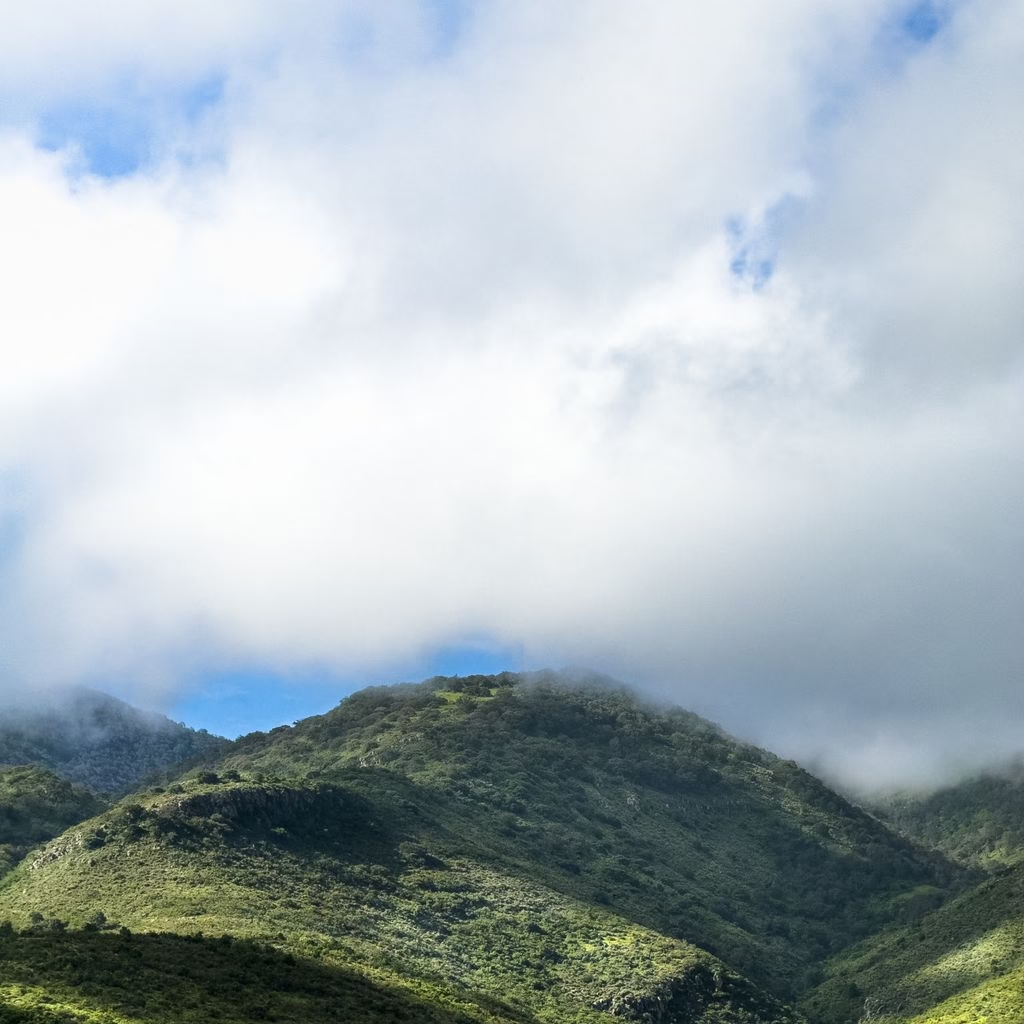
Morning SATA flight to Terceira (30 minutes). Arrive in Angra do Heroísmo — a UNESCO World Heritage city of extraordinary preservation, where the 16th-century street grid, harbour fortifications, and Baroque churches have survived intact.
Afternoon
Walk the old town: Rua Direita, Praça Velha, the Se Cathedral, and the Castelo de São João Baptista overlooking the bay. The whole historic centre is walkable in an afternoon.
Evening
Dinner in Angra do Heroísmo — order alcatra, Terceira’s signature dish: beef shin slow-braised in wine, allspice, and bay leaves in a clay pot. With it: Biscoitos wine from the island’s volcanic vineyards.
Terceira Interior

Morning
Algar do Carvão — a 2km-long lava tube descending into the earth, opening into a vast volcanic chimney with a lake at the bottom. One of the geological wonders of the Azores, and almost always uncrowded.
Afternoon
Monte Brasil — the volcanic peninsula attached to Angra’s harbour, walked by locals every evening. The trail around its perimeter takes two hours and gives the finest view of the city from the water.
Evening
Drive to Serreta on Terceira’s remote west coast for the sunset — the most dramatic coastline on the island. Return to Angra for a final Terceirense dinner.
Terceira → Faial — Horta Marina

Morning
Flight to Faial (30 minutes). Arrive in Horta — the mid-Atlantic yachting capital, where sailors completing Atlantic crossings have been stopping for centuries.
Afternoon
The Horta marina murals — thousands of paintings left by yacht crews on every walkable surface of the marina since the 1980s. Walking the full marina to read the crews’ stories takes a full afternoon.
Evening
Peter’s Café Sport — open since 1918, legendary among offshore sailors, serving its famous gin and angostura to whoever arrives from wherever. Order the house gin and tonic and ask the bartender about the latest crossing.
Faial — Caldeira & Capelinhos

Morning
Faial’s Caldeira — a 400m-deep volcanic crater 8km across at the rim. The 8km circumference trail takes 2-3 hours in clear weather; the view into the bowl is spectacular, but the fog can be absolute. Check the morning visibility before driving up.
Afternoon
Capelinhos — the westernmost point of Europe, created by a submarine volcanic eruption in 1957-58 that buried a lighthouse to its lantern in ash and added a new peninsula to the island. The interpretive centre tells the story of the 2,000 islanders who emigrated to the US in its aftermath.
Evening
Dinner in Horta with views across the canal to Pico’s perfect volcanic cone — 2,351m, lit by the last light. In clear conditions this is one of the finest evening views in the Atlantic.
Faial → Pico — Whales & Vineyards

Morning
Early morning ferry to Pico (30 minutes). Board a whale-watching boat from Madalena — vigias (lookouts) on the cliff tops spot whales using traditional methods and radio coordinates to the boats below. Sperm whales are resident year-round in these deep channels.
Afternoon
The Pico wine landscape (UNESCO World Heritage) — networks of black basalt walls divide vineyards where Verdelho grapes grow in volcanic soil a metre above the Atlantic. Visit Cooperativa Vitivinícola do Pico for a tasting.
Evening
Swim at Lajes do Pico’s natural lava pools as the sun goes down behind Faial across the water. Dinner in Madalena — order cherne (wreckfish, abundant in these deep waters) with Pico wine.
Pico Volcano Summit

Morning
Pre-dawn start (4-5am) for the ascent of Pico — Portugal’s highest peak at 2,351m. The trail takes 3-4 hours up; a licensed mountain guide is required and must be booked the day before from the Pico Mountain House. The summit views, on a clear day, extend to four other islands.
Afternoon
Descend by midday and rest. The volcano demands respect — bring warm layers, rain gear, and good boots regardless of the forecast at sea level.
Evening
Recovery dinner in Madalena. Figs preserved in aguardente (local firewater) for dessert — the Pico speciality that appears on every traditional menu.
Pico → São Jorge — The Fajãs

Morning
Ferry from Pico to São Jorge (1 hour). Check in and begin exploring the island’s extraordinary geography — fajãs, lava shelf habitats at the base of immense cliffs, inaccessible by road and reachable only on foot or by sea.
Afternoon
Fajã dos Cubres — the most famous fajã on São Jorge, with a lagoon, a community of a handful of families, and birdlife found almost nowhere else in the Azores. The walking descent from the clifftop takes about an hour.
Evening
Caldeira de Santo Cristo — a fajã at the foot of the highest cliffs on the island, famous for the northernmost population of clams in the world and for being effectively cut off from the rest of São Jorge. Dinner in Velas.
São Jorge — Walks & Cheese

Morning
Walk the Fajã do Ouvidor trail — a clifftop path with extraordinary views down the sheer escarpment to the Atlantic-facing fajãs below. One of the finest coastal walks in the Azores.
Afternoon
São Jorge cheese factory — the island produces the finest cheese in the Azores: aged, tangy, semi-hard cow’s milk with a flavour unlike anything on the mainland. A factory visit and tasting is straightforward to arrange in Velas.
Evening
Last evening on the central island group. Slow dinner in Velas with a bottle of São Jorge wine and a view of Pico’s cone across the channel — exactly as it should end.
São Jorge → São Miguel — Closing Day

Morning
Morning flight back to São Miguel via Terceira or direct (check SATA schedules). Arrive by early afternoon.
Afternoon
Caldeira Velha thermal waterfall near Ribeira Grande — a forested gorge with natural hot springs feeding a small pool beneath a waterfall, tinted green by algae. One of São Miguel’s most beautiful spots, and less visited than Furnas.
Evening
Final dinner in Ponta Delgada. Walk the harbour promenade one last time. The Azores has a way of making departure feel premature.
Departure

Morning
Final coffee and a pastel de nata at a Ponta Delgada café before the flight. Ponta Delgada airport serves direct connections to Lisbon, the UK, and continental Europe, with increasing transatlantic routes from Canada.
Afternoon
Departure from Ponta Delgada (PDL). Note the island one last time from the air — the caldera and twin lakes of Sete Cidades are visible from the window on a clear day.