


England in fourteen days is a study in contrast — the noise and scale of London giving way to cathedral cities, market towns, wild moorland, and limestone coastline, all within a few hours of each other. This itinerary moves north from London: the Thames, Oxford’s spires, the Cotswolds, Bath’s Georgian terraces, Stratford-upon-Avon, the Peak District, York, and the Lake District. It’s enough to understand why England is both a country of deep history and an endlessly surprising place to travel.
London — Arrival & South Bank

Morning
Arrive into Heathrow or Gatwick and transfer to central London. Check in and take a slow walk to clear the flight — the South Bank between Waterloo Bridge and Tower Bridge is one of the finest urban walks in Europe: Tate Modern, the Globe Theatre, Borough Market, Southwark Cathedral, and Tower Bridge all within 3km.
Afternoon
Borough Market for lunch — one of London’s oldest and finest food markets, open Thursday through Saturday. The raclette stalls, Monmouth Coffee, and the Neal’s Yard cheese counter are the essentials. Cross Tower Bridge on foot for the views up and down the Thames.
Evening
Dinner in Bermondsey or Southwark — the neighbourhood has some of London’s best restaurants without the tourist premiums of the West End. Early night; the jet lag is real.
London — History & Ceremony
Morning
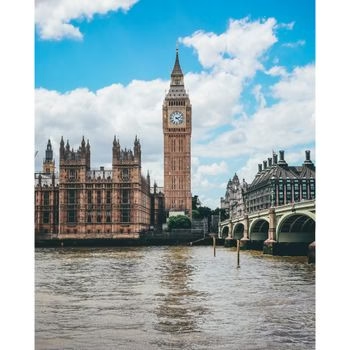
Westminster Abbey and the Houses of Parliament — book Abbey tickets in advance, arrive at opening. The Royal Chapels, Poets’ Corner, and the Coronation Chair are all here; allow 90 minutes minimum. Walk across Parliament Square to St James’s Park.
Afternoon
The Changing of the Guard at Buckingham Palace (check schedule for your visit date — it’s not daily). Afterwards, walk St James’s Park to Trafalgar Square and the National Gallery — free entry, one of the world’s great permanent collections, and worth two hours.
Evening
West End theatre or a dinner at Rules in Covent Garden — London’s oldest restaurant (1798), serving British game and traditional puddings. Book both in advance.
London — Museums & East End
Morning
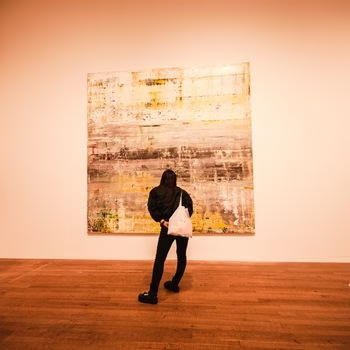
The British Museum — free entry, allow three hours. The Rosetta Stone, the Elgin Marbles, the Sutton Hoo helmet, and the Egyptian mummies are all here. Don’t try to see everything; pick two or three rooms and go deep.
Afternoon
Brick Lane and Shoreditch in East London — street art, vintage markets, Bangladeshi curry houses, and the best bagels in the city at Beigel Bake (open 24 hours). The Spitalfields Market is excellent on Sundays.
Evening
Cocktails at a Soho bar followed by dinner in Chinatown or on Berwick Street. London’s evening economy is concentrated in a small area — everything is walkable.
Oxford

Morning
Train from London Paddington to Oxford (55 minutes). Walk into the city centre along the High Street — the view from Magdalen Bridge towards the spires of Merton, Oriel, and All Souls is the one that appears on every postcard. Visit the Bodleian Library courtyard and the Radcliffe Camera.
Afternoon
Punt along the River Cherwell from Magdalen Bridge — you can hire a punt independently (cheaper) or take a chauffeured one. The Cherwell meadows in late afternoon, with the University Parks on one side, are genuinely lovely. Visit Christ Church for the hall that inspired Hogwarts.
Evening
Dinner at The Cherwell Boathouse — a riverside restaurant attached to the punting station, reliably good. Or the covered market on Market Street for independent food stalls. Stay overnight in Oxford.
Cotswolds — Bourton, Burford & Bibury
Morning
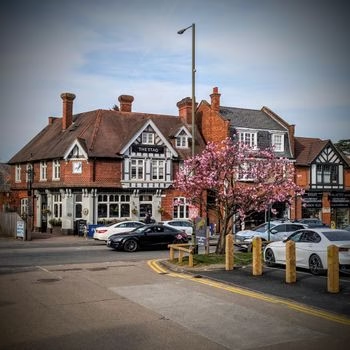
Hire a car in Oxford (or join a day tour) and drive into the Cotswolds. Start at Bourton-on-the-Water — the ‘Venice of the Cotswolds’, where the River Windrush runs through the village centre under low stone bridges. Then Burford, one of the finest high streets in England, sloping down to a medieval bridge.
Afternoon
Bibury — a village of 17th-century Arlington Row weavers’ cottages that William Morris called the most beautiful village in England. Trout farm and an easy riverside walk along the Coln. Stop at Northleach on the way back for the proportions of the church.
Evening
Return to Oxford or push on to Cheltenham to be closer to Bath for the next day. Dinner in Cheltenham’s Montpellier quarter.
Bath

Morning
Drive or train to Bath (1 hour from Oxford). The Roman Baths — one of Britain’s finest ancient sites, a complete Roman bathing complex still fed by the original hot spring. Allow two hours; the audio guide narrated by Bill Bryson is excellent.
Afternoon
Walk Bath’s Georgian streets: the Royal Crescent (complete the loop via The Circus), Pulteney Bridge over the Avon, and the Assembly Rooms. The city is built almost entirely from honey-coloured Bath stone and is best understood at walking pace.
Evening
Thermae Bath Spa — the only place in Britain where you can bathe in naturally hot spring water, in a rooftop pool overlooking the city. Book in advance. Dinner afterwards in the Walcot Street area.
Stratford-upon-Avon & the Midlands

Morning
Drive north to Stratford-upon-Avon (1.5 hours). Shakespeare’s Birthplace on Henley Street — the timber-framed house where William Shakespeare was born in 1564, with well-curated exhibits on his life and the Elizabethan world. The RSC Collection in the theatre is free and excellent.
Afternoon
Punt or hire a rowing boat on the River Avon for an hour — the view back to the church where Shakespeare is buried (Holy Trinity, free entry) is the best in Stratford. Anne Hathaway’s Cottage at Shottery is a 20-minute walk through fields.
Evening
RSC performance at the Royal Shakespeare Theatre — booking months ahead is essential for anything in the main house. Or drive on to Bakewell in the Peak District (1.5 hours) to be positioned for Day 8.
Peak District
Morning
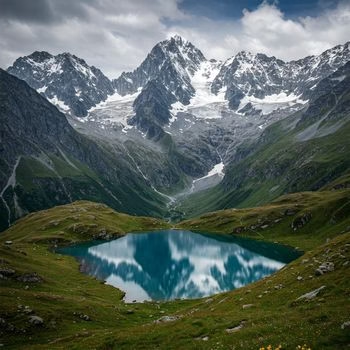
The Peak District’s southern limestone dales: start at Lathkill Dale — a nature reserve following a river through a dry limestone gorge, entirely flat and one of England’s finest short walks (7km round trip). Wildflowers in spring, kingfishers year-round.
Afternoon
Chatsworth House — the seat of the Duke of Devonshire, set in a Capability Brown landscape park above the River Derwent. The house interiors are extraordinary: Old Masters, Flemish tapestries, and the Painted Hall. Allow three hours for house and gardens.
Evening
Bakewell pudding at The Old Original Bakewell Pudding Shop (the original recipe, not to be confused with Bakewell tart). Dinner and overnight in Bakewell or Buxton.
Peak District — Moors & Edges

Morning
Drive north into the Dark Peak — the grittier, wilder moorland above the limestone. Stanage Edge: a 6km gritstone escarpment above Hathersage, popular with climbers and one of the finest ridge walks in the Midlands. Clear days give views across Sheffield and the Hope Valley.
Afternoon
Hathersage village — Charlotte Brontë set Jane Eyre here (the church contains the grave of Little John, Robin Hood’s lieutenant). Down into the Hope Valley for tea at one of the cafés in Castleton, beneath the ruins of Peveril Castle.
Evening
Drive towards York (2 hours) or stop overnight in Sheffield — underrated city with excellent restaurants in the Kelham Island district.
York
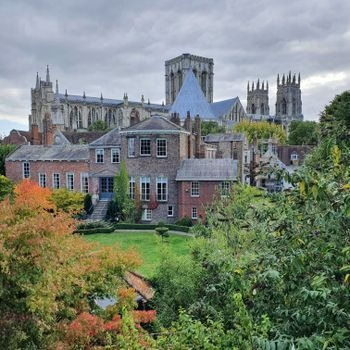
Morning
York Minster — the largest Gothic cathedral in Northern Europe. Climb the central tower (275 steps) for the best view of the city and the Vale of York. The Great East Window is the largest expanse of medieval stained glass in England; allow 90 minutes inside.
Afternoon
The Shambles — a medieval street of overhanging timber-framed buildings, once the city’s butchers’ quarter and now a lane of independent shops and cafés. Walk the city walls (4.5km, completely intact) — the stretch from Bootham Bar to Monk Bar is the finest.
Evening
Dinner at one of the restaurants around Gillygate or Goodramgate — the Georgian streets north of the Minster have been quietly excellent for years. The Yorkshire Museum gardens are lovely in the evening light.
North York Moors & Whitby

Morning
Drive east through the North York Moors National Park to Whitby — 45 minutes across open heather moorland. Whitby Abbey: a 13th-century ruin on a clifftop above a harbour town, the inspiration for Bram Stoker’s Dracula. The 199 steps up from the town are part of the pilgrimage.
Afternoon
Whitby smoked kippers and fish and chips on the harbourfront — the town has been curing fish since the Middle Ages and the kippers are genuinely world-class. Walk the old town’s cobbled yards and the Captain Cook Memorial Museum.
Evening
Return to York or continue to the Yorkshire Dales to be positioned for Day 12.
Yorkshire Dales

Morning
Yorkshire Dales National Park: Aysgarth Falls (three spectacular limestone waterfalls on the River Ure, free, 20-minute walk from the car park) and Hawes, the highest market town in the Dales and home to the Wensleydale Creamery — the cheese Wallace and Gromit made famous, made here since 1897.
Afternoon
Malham Cove — a 70-metre curved limestone cliff face, formed at the end of the last Ice Age, with a limestone pavement on top used as a filming location for Harry Potter. A 2km walk from the village of Malham across some of England’s most distinctive landscape.
Evening
Drive to the southern Lakes (2 hours) and check in near Windermere or Ambleside for the final two days.
Lake District — Windermere & Langdale

Morning
Windermere — take the ferry from Bowness to Hawkshead or simply walk the eastern shore path from Ambleside. The lake is 18km long and the light on the fells above it changes hourly. Beatrix Potter’s Hill Top farmhouse at Near Sawrey is a 10-minute drive.
Afternoon
Great Langdale — one of England’s finest valley landscapes: a flat glaciated floor flanked by the Langdale Pikes, the Crinkle Crags, and Bow Fell. Walk from Old Dungeon Ghyll up to Stickle Tarn (90 minutes return) for the classic high-level view back down the valley.
Evening
Dinner at The Drunken Duck Inn near Ambleside — a Lakeland pub with its own brewery and one of the best kitchens in the national park. Book weeks ahead.
Keswick & Departure

Morning
Drive north to Keswick (30 minutes). Derwentwater — the most dramatically situated of the Lakes, ringed by fells on three sides. Take the circular launch around the lake or walk the western shore path from Keswick to Manesty (3km each way). The view from Friar’s Crag across the lake to Cat Bells is one of the most photographed in England.
Afternoon
Castlerigg Stone Circle — a Neolithic monument predating Stonehenge, set on a flat hilltop above Keswick with a 360-degree panorama of the surrounding fells. Free, always open, and genuinely moving in all weathers. Then south to Manchester Airport for evening flights.
Evening
Departure from Manchester (2 hours from Keswick) or return south to London by train (3.5 hours on LNER from York, or drive via the M6).