


Rome doesn’t overwhelm you — it accumulates. A forum here, a Baroque fountain there, a church around every corner hiding a Caravaggio that would be the centrepiece of any museum in the world. Italy’s capital has been drawing visitors for two thousand years and has absolutely no intention of making it easy, quick, or efficient. That’s the point. Slow down, eat well, and let Rome do what it does.
Capital
Rome, Italy
Currency
Euro (€)
Language
Italian
Timezone
CET — UTC+1 (CEST UTC+2 in summer)
Best Season
Apr–May, Sep–Oct
Visa
90 days visa-free (Schengen — Canadian passport)
Rome for Every Travel Style
The Art Lover’s Rome
Rome contains more significant art per square kilometre than any city on earth. A week isn’t enough to scratch the surface — but here’s where to start.
- The Sistine Chapel and Vatican Museums — book the first entry slot of the day.
- Borghese Gallery: the finest Bernini sculptures in existence. Limited entry — book months ahead.
- Caravaggio trail: seven original works scattered across Roman churches, all free to view.
- The Capitoline Museums: the world’s oldest public art museums, overlooking the Forum.
- Santa Maria Maggiore and Santa Maria in Trastevere — Byzantine mosaics that stop you cold.
The Foodie’s Rome
Roman cuisine is ancient, stubborn, and magnificent — four or five canonical pasta dishes, a handful of essential street foods, and a coffee culture that treats shortcuts as a personal insult.
- Cacio e pepe at Tonnarello in Trastevere or Roscioli near Campo de’ Fiori.
- Supplì (fried rice balls) from Supplì Roma — the definitive Roman street snack.
- Campo de’ Fiori market for produce; Testaccio market for the real Roman food scene.
- A proper Roman lunch at a Testaccio trattoria — trippa, rigatoni con pajata, abbacchio.
- Gelato at Fatamorgana or Giolitti — look for natural colours and covered trays.
Rome Off the Beaten Path
Rome is so deep that even seasoned visitors miss entire layers. Beneath the tourist surface is a city of neighbourhood bakeries, uncrowded churches, and ruins in car parks.
- The Aventine Keyhole: a tiny aperture in a Knights of Malta gate with a perfectly framed view of St. Peter’s.
- Palazzo Doria Pamphilj — the finest private art collection in Rome, almost always uncrowded.
- Pigneto neighbourhood for aperitivo and a glimpse of contemporary Roman life.
- The Appian Way on Sunday, when it’s closed to cars — cycle it from the Catacombs.
- Centrale Montemartini museum: ancient sculpture displayed against industrial machinery. Genuinely extraordinary.
When to Go
Spring
Mar – May
- April and May are Rome’s finest months — warm, golden, and before the summer invasion.
- Wisteria on the Palatine Hill; outdoor restaurant terraces fully alive.
- Easter brings processions and pilgrims to St. Peter’s — spectacular, but very crowded.
- Book Vatican and Colosseum tickets 3–4 weeks ahead even in spring.
Summer
Jun – Aug
- July and August regularly hit 35–38°C — the cobblestones radiate heat from mid-morning.
- Peak crowds at every major site; queues at the Colosseum can exceed two hours.
- Many Romans leave in August (Ferragosto) — some neighbourhood restaurants close for the month.
- June is manageable — warm and beautiful but without the extreme heat of high summer.
Autumn
Sep – Nov
- September is Rome at its best — warm sea (if you day-trip), quieter sites, excellent light.
- October brings cooler evenings and a softer golden quality to the city’s stone.
- November is quieter still and prices drop — the Vatican in November feels almost private.
- Rome’s restaurants come back to full life in autumn after the August exodus.
Winter
Dec – Feb
- Mild by northern standards (8–14°C), occasionally rainy, but rarely freezing.
- Christmas in Rome is atmospheric — illuminated streets, presepe (nativity scenes) everywhere.
- Vatican queues in January and February can be almost non-existent on weekdays.
- Lowest prices and fewest tourists of the year — a genuinely good time to visit.
Top Experiences
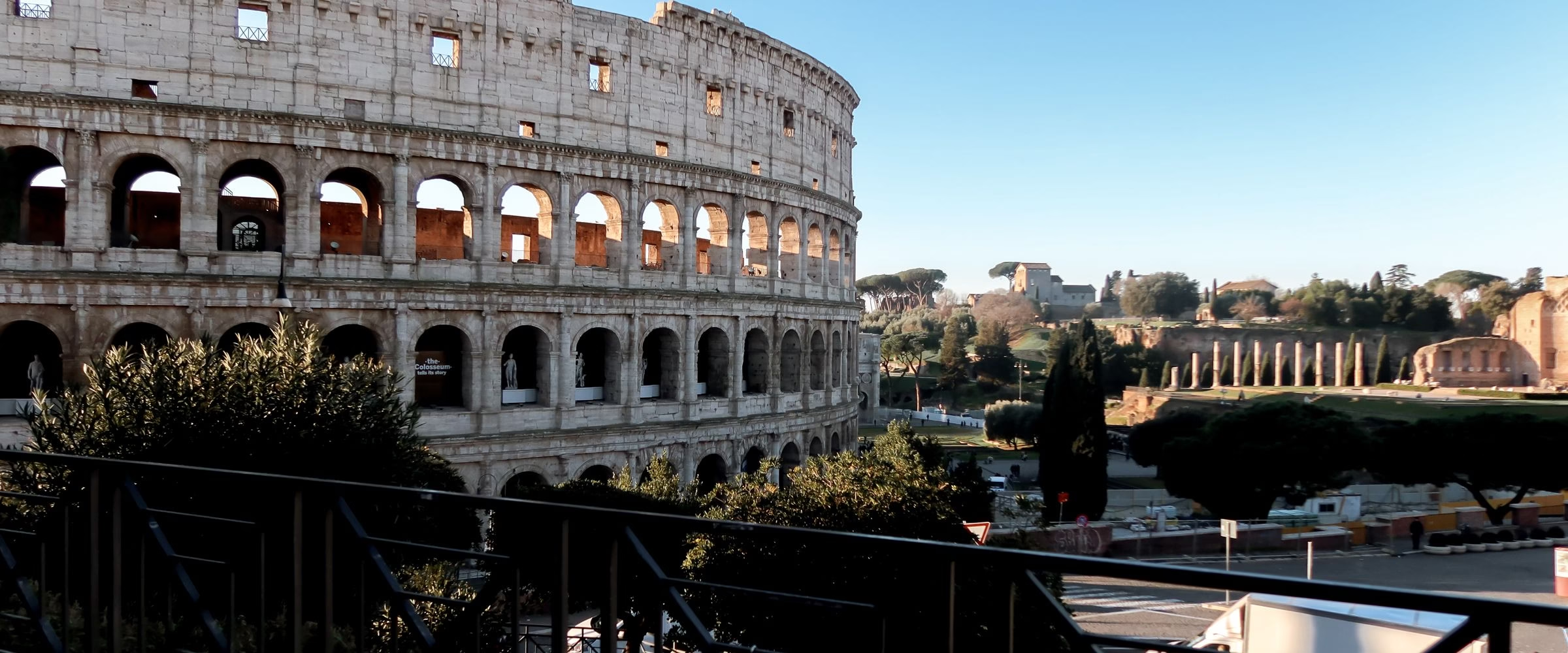
The Colosseum & Roman Forum
Why Go?
Standing on the floor of the Colosseum where 50,000 Romans once watched gladiatorial combat is one of those rare travel moments that genuinely lives up to the anticipation. The Roman Forum next door is equally significant — the political heart of the ancient world, now a gorgeous ruin you can walk through.
Best For
History lovers, archaeology fans, and anyone who wants to understand the physical reality of ancient Rome.
Don’t Miss
The underground arena level of the Colosseum — visible on special tours that reveal the network of tunnels below the sand where animals and gladiators waited.

Vatican City & the Sistine Chapel
Why Go?
Michelangelo spent four years on his back painting the Sistine Chapel ceiling. An hour standing beneath it barely scratches what he created — but it’s enough to understand why people weep. The Vatican Museums contain 54 galleries leading to that ceiling; the route is designed to overwhelm, and it succeeds.
Best For
Art lovers, cultural travellers, and anyone making their first visit to Rome.
Don’t Miss
Booking the first entry slot (8am) to arrive before the tour groups — the Sistine Chapel in relative quiet, before the room fills and guards start shushing everyone, is a fundamentally different experience.
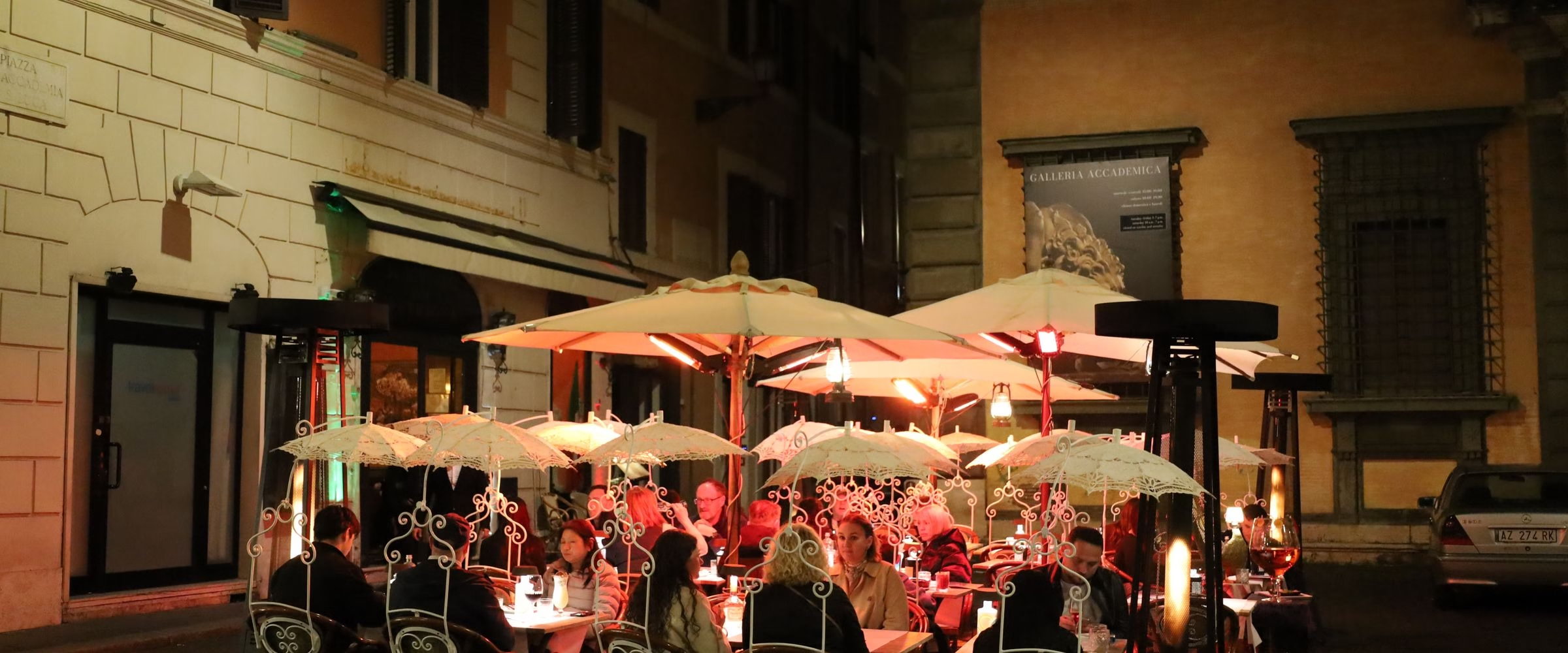
Trastevere at Night
Why Go?
Trastevere is the neighbourhood Rome forgot to modernise — medieval lanes, ivy-covered facades, and the kind of aimless evening walk that turns into a three-hour dinner you didn’t plan. The Basilica of Santa Maria in Trastevere, lit gold at night, is one of the most beautiful sights in the city.
Best For
Couples, first-timers wanting to feel Rome at its most romantic, and anyone who prioritises atmosphere over efficiency.
Don’t Miss
The mosaics inside Santa Maria in Trastevere — 12th-century Byzantine gold that glows under the basilica’s lights in the evening.
Food & Drink
Roman cuisine is one of the world’s great peasant food traditions — a cuisine born from necessity that became genius. A handful of canonical dishes, the finest cured meats in Italy, and a coffee culture that has been perfecting the same three drinks for a century.
Know the Neighbourhoods
Trastevere
Medieval, vine-covered, the neighbourhood Rome forgot to modernise
Best for: Evening dining, romantic walks, the most atmospheric streets in the city
- Santa Maria in Trastevere — 12th-century mosaics glowing gold at night.
- Piazza di Santa Maria in Trastevere: locals and travellers sharing the same fountain steps.
- Dense network of restaurants; eat late and share a carafe of house wine.
Testaccio
Working-class, food-obsessed, the real cucina romana
Best for: Food markets, offal-based cuisine, unpretentious trattorias
- Testaccio Market: the best food market in Rome — genuinely local, excellent quality.
- Trapizzino — pizza pockets filled with Roman stew, invented here.
- The Protestant Cemetery where Keats and Shelley are buried, oddly beautiful.
Prati
Upscale, residential, near the Vatican without the tourist tax
Best for: Better-value restaurants, shopping, morning coffee before Vatican visits
- Via Cola di Rienzo for food shopping — delis, wine shops, and bakeries.
- Castel Sant’Angelo is right on the neighbourhood’s edge — impressive at sunset.
- Significantly fewer tourists than the historic centre; locals-only café culture.
Pigneto
East Rome — creative, gentrifying, Pasolini’s old neighbourhood
Best for: Aperitivo culture, independent bars, travellers wanting the contemporary city
- Via del Pigneto for the aperitivo strip — locals from 6pm, every night.
- Street art and independent galleries throughout the neighbourhood.
- Some of Rome’s most interesting restaurants at a fraction of the tourist-zone price.
Getting There & Around
Getting There
Getting Around
Respect the Culture, Fit Right In
Coffee Culture
- Espresso is drunk at the bar, standing — sitting down costs significantly more (the ‘servizio’ surcharge).
- Cappuccino is strictly a morning drink. Ordering one after lunch or dinner marks you immediately as a tourist.
- Caffè americano exists but is not respected. If you want a long coffee, order a caffè lungo.
- The coffee is excellent everywhere. Chains are unnecessary and generally avoided by Italians.
- Pay before you drink at a busy bar (pay the cashier first, then take your receipt to the counter).
Church Etiquette
- Shoulders and knees must be covered to enter any church — scarves or wraps are sometimes available at the door.
- Many churches are still active places of worship. If a mass is in progress, do not enter the main nave.
- Flash photography is prohibited in most churches; the Sistine Chapel enforces a total photography ban.
- Entrance to most Roman churches is free — give something to the collection if you stay a while.
- The Vatican dress code is enforced strictly; guards will turn you away for bare shoulders or shorts.
Dining & Public Behaviour
- A coperto (cover charge per person) appears on most restaurant bills — check the menu so it isn’t a surprise.
- Bread is served to mop the plate (fare la scarpetta), not as an appetiser with oil.
- Do not eat or drink on the steps of churches, the Spanish Steps, or near the Trevi Fountain — fines apply.
- Long lunches are cultural (1–4pm); smaller shops and some attractions close during this window.
- Italians do not rush meals. Requesting the bill before you’re ready is considered rude.
Getting Around
- Always validate your bus or tram ticket immediately upon boarding — inspectors check regularly.
- Roman traffic is intense. Cross only at pedestrian crossings and wait for cars to fully stop.
- Cobblestones are beautiful and punishing — comfortable walking shoes are not optional.
- Many streets in the historic centre are pedestrianised or ZTL zones (restricted traffic); taxis and rental cars cannot enter.
- Pickpocketing is common near major monuments and on crowded buses — keep bags in front of you.
Travel Tips
Frequently Asked Questions
When is the best time to visit Rome?
Do Canadians need a visa to visit Rome?
What currency is used in Rome?
What is the easiest way to get around Rome?
What cultural customs should visitors know before going to Rome?
Ready to plan your Rome escape?
Rome takes multiple visits to truly know — but even a first trip can go far beyond the obvious, with the right restaurants, the right timing, and the right churches chosen over the wrong ones. At Fly Away Travel Co., we build Rome itineraries that reward the curious traveller. Contact us today and let’s start planning.