

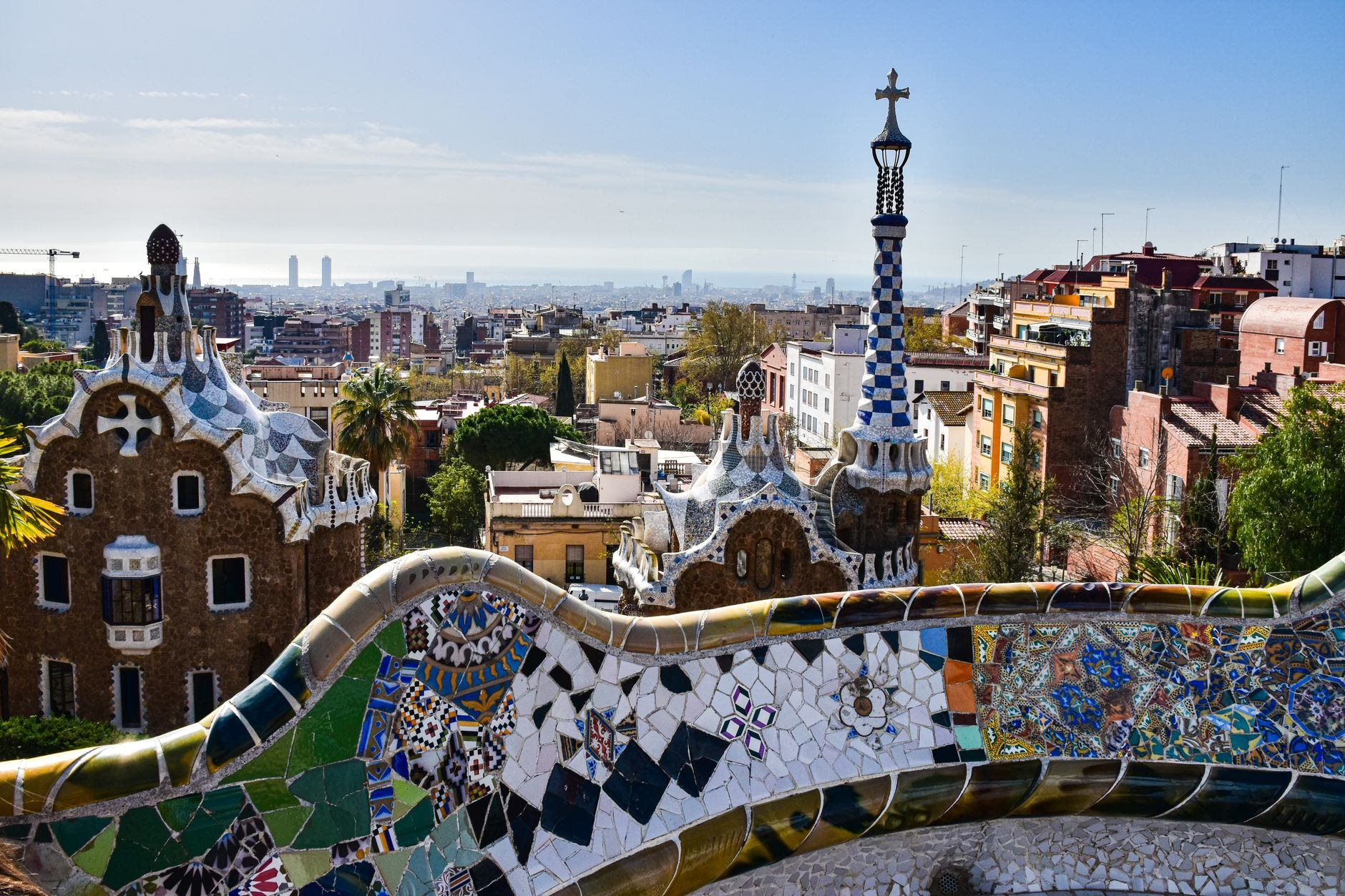
Barcelona is the city that gets under your skin. Gaudí’s impossible architecture rises from a street grid designed by a utopian planner; the Gothic Quarter’s Roman walls sit beneath medieval palaces; and the waterfront — once industrial and ignored — is now a succession of beaches, design museums, and seafood restaurants that stay open until the city finally sleeps, sometime around 3am. Catalonia’s capital is also emphatically not just Spain — it has its own language, its own football, its own culinary tradition, and a fierce pride in the distinction that visitors are warmly invited to understand.
City
Barcelona, Catalonia, Spain
Currency
Euro (€)
Language
Catalan & Spanish (both official)
Timezone
CET — UTC+1 (CEST UTC+2 in summer)
Best Season
Apr–May, Sep–Oct
Visa
90 days visa-free (Schengen — Canadian passport)
Barcelona for Every Travel Style
The Architecture Lover’s Barcelona
Barcelona contains more significant early 20th-century architecture than any city in the world — a Modernista movement led by Gaudí that reimagined what buildings could be, expressed in stone, tile, and forged iron across an entire city grid.
- La Sagrada Família — Gaudí’s life work, still under construction, unlike any church on earth.
- Casa Batlló and Casa Milà (La Pedrera) on Passeig de Gràcia — the Modernista boulevard.
- Park Güell for the mosaic terraces and the city panorama from the hillside.
- Palau de la Música Catalana — Domènech i Montaner’s extraordinary concert hall, interior only on guided tour.
- Sant Pau Recinte Modernista — Gaudí’s rival and equal, a hospital complex that is now a stunning open museum.
The Foodie’s Barcelona
Catalonia has one of Europe’s most celebrated food cultures — a cuisine built on the Mediterranean pantry, market culture, and a culinary creativity that produced El Bulli. Barcelona is where you eat it at every level.
- Pa amb tomàquet (bread rubbed with tomato) at every meal — it appears automatically and is always correct.
- Pintxos bar crawl in El Born — order fresh, not the ones sitting on the counter.
- Mercat de Santa Caterina (not La Boqueria — too touristy) for produce and market culture.
- Seafood at the Barceloneta restaurants — fideuà (noodle paella) is the local order.
- Vermut (vermouth) on Sunday morning at a bar in Gràcia — the Catalan brunch tradition.
Barcelona After Dark
Barcelona operates on a different clock — dinner at 10pm, bars from midnight, clubs from 2am. The city doesn’t peak until most cities have been asleep for hours, and the morning light comes up on a city that’s still humming.
- Vermouth hour (vermut) from 7–9pm at bars in El Born or Gràcia — the proper start to a Barcelona evening.
- Late dinner in Barceloneta at a seafood restaurant with a terrace — after 9:30pm when the locals arrive.
- Cocktail bars in El Born: Bar Marsella (the oldest bar in Barcelona, absinthe) or Two Schmucks.
- Jazz and live music at Harlem Jazz Club in the Gothic Quarter — small, loud, excellent.
- Sala Apolo or Razzmatazz for club nights — both open at 1am and peak around 4am.
When to Go
Spring
Mar – May
- April and May are Barcelona’s finest months — warm, long days, and the city at its most photogenic.
- Sant Jordi (April 23) fills the streets with books and roses — Catalonia’s Valentine’s Day, and extraordinary.
- Crowds are present but manageable; Sagrada Família queues are shorter than summer.
- Hotel prices are lower than peak season and the city doesn’t feel overwhelmed.
Summer
Jun – Aug
- July and August bring 30–35°C heat and tourist numbers that overwhelm every major site.
- The beaches are packed from 10am; restaurants require booking weeks ahead.
- Barceloneta beach in August is an experience — just not a restful one.
- June is the exception: warm, buzzing with the city’s festival calendar, and pre-peak.
Autumn
Sep – Oct
- September is arguably the best time — warm sea, thinning crowds after Labour Day, lower prices.
- La Mercè festival (late September) is Barcelona’s biggest annual celebration: free concerts, human towers, fireworks.
- October brings cooler evenings and the best light for photography on Gaudí’s stone surfaces.
- The cultural season launches in autumn — opera, theatre, and gallery openings from September.
Winter
Nov – Feb
- Mild (10–15°C), occasionally rainy, but rarely cold by any meaningful standard.
- Christmas markets on Plaça de Catalunya and the Gothic Quarter are genuinely excellent.
- Fewest tourists; Sagrada Família and Park Güell are walkable without crowds.
- Lowest prices of the year; January and February offer exceptional value.
Top Experiences

La Sagrada Família
Why Go?
Gaudí began Barcelona’s defining building in 1882 and died in 1926, run over by a tram, with the work less than a quarter complete. Construction continues today, funded entirely by entrance fees, expected to finish around 2030. The interior — lit by stained glass that turns the nave into an underwater forest of gold and blue — is unlike any church interior on earth. It’s one of those rare things that exceeds even inflated expectations.
Best For
Everyone — this is one of the world’s genuinely unmissable buildings, regardless of your interest in architecture or religion.
Don’t Miss
Booking the tower access (Nativity or Passion) on top of your general entry — the view of Gaudí’s roofscape from inside the towers is extraordinary and the tickets sell out weeks ahead.
Park Güell & the Gaudí Trail
Why Go?
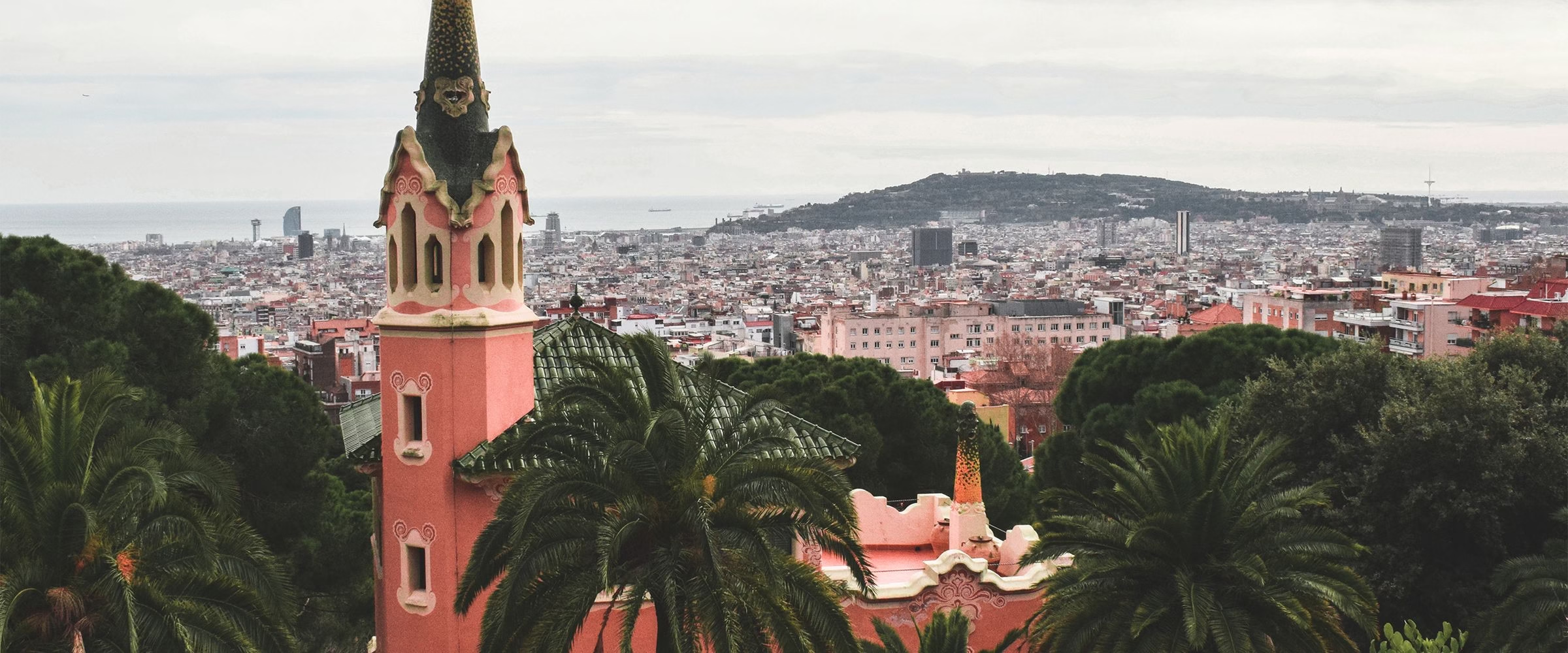
Park Güell was originally planned as an exclusive garden city for 60 houses; only two were built and Gaudí ended up living in one of them. What remains is a hillside park of sinuous stone viaducts, mosaic terraces, and the gingerbread gatehouses that have become Barcelona’s most reproduced image — above a panorama of the entire city and the Mediterranean beyond.
Best For
Architecture enthusiasts, photographers, and families who can handle the hill climb.
Don’t Miss
Booking the monumental zone tickets in advance (timed entry, limited numbers) — the terrace is genuinely too crowded without advance booking in high season, and turn up at opening time regardless.
El Born & the Gothic Quarter
Why Go?
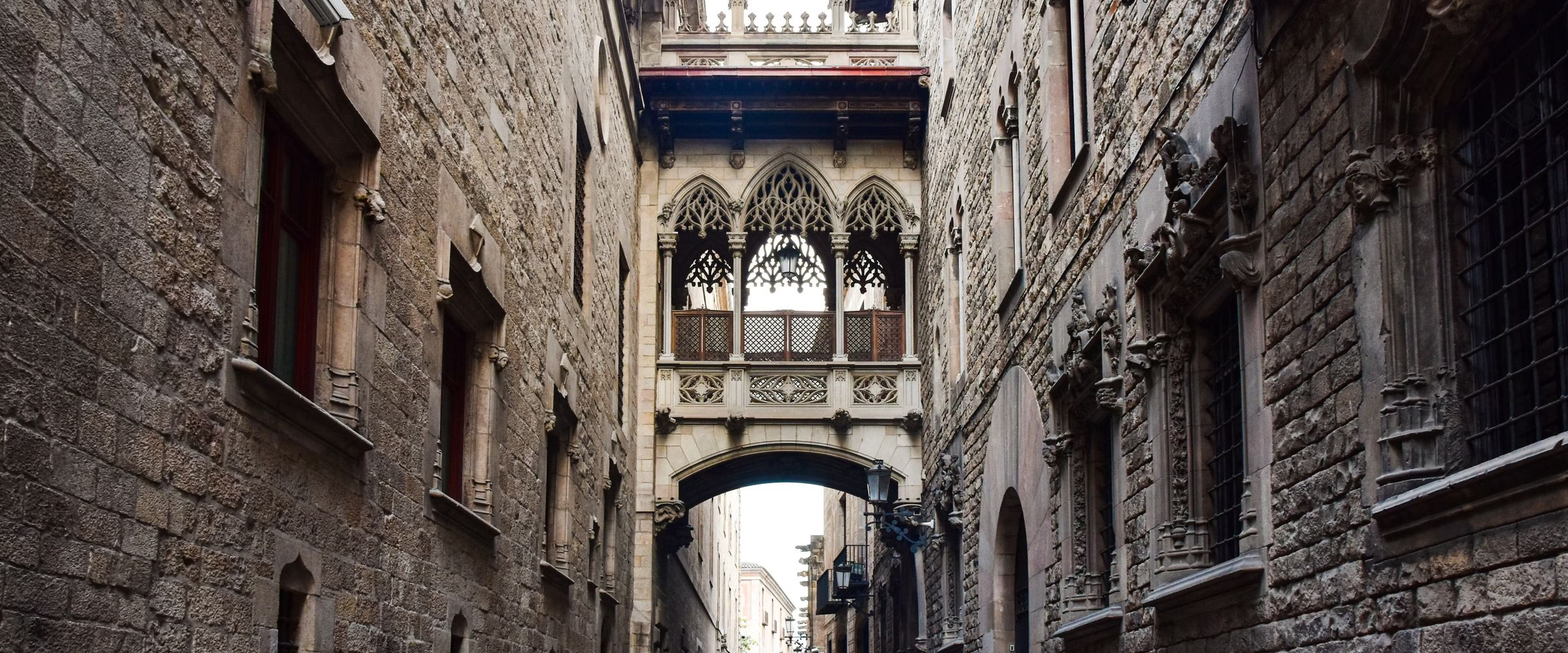
El Born and the adjacent Gothic Quarter contain the medieval heart of Barcelona — Roman walls, a 14th-century cathedral, and the Picasso Museum in a medieval merchant’s palace. El Born itself has become the city’s most creative neighbourhood: cocktail bars in former palaces, independent boutiques, and the extraordinary glass-covered ruins of a 1714 neighbourhood beneath El Born Cultural Centre.
Best For
First-timers wanting to feel Barcelona’s history alongside its contemporary life, and anyone who enjoys an aimless evening walk with excellent bar stops.
Don’t Miss
The ruins beneath El Born Cultural Centre — a preserved 18th-century neighbourhood destroyed during the siege of 1714, visible through glass flooring from above. Free to view, rarely crowded, and genuinely moving.
Food & Drink
Catalan cuisine is built on the Mediterranean — olive oil, tomatoes, seafood, and cured meats — inflected with a culinary creativity that produced both the world’s most avant-garde restaurant (El Bulli) and one of its most enduring peasant food traditions. Barcelona is where you eat at every level of this tradition, from a corner bar’s vermut and olives to a Michelin-starred modernist tasting menu.
Know the Neighbourhoods
Gothic Quarter (Barri Gòtic)
Medieval Barcelona — Roman foundations, Gothic cathedral, tourist-heavy but essential
Best for: First-timers, the cathedral, the Roman Temple of Augustus, evening wandering
- The Barcelona Cathedral and its cloister full of geese — odd and wonderful.
- Temple d’August — a 1st-century Roman temple in a courtyard behind a Gothic building. Free, unmissable.
- Plaça Reial for evening drinks — the city’s most atmospheric square, best after 9pm.
El Born
Barcelona’s coolest neighbourhood — art, cocktails, Picasso, and great restaurants
Best for: Pintxos bars, the Picasso Museum, independent boutiques, evening drinks
- Museu Picasso — 4,000 works in a 15th-century palace. Book ahead; it’s deservedly popular.
- El Born Cultural Centre and the preserved 1714 ruins beneath the glass floor.
- Carrer del Rec and Carrer del Parlament for the densest concentration of good bars in the city.
Gràcia
Village-like, local, relaxed — Barcelona’s residential sweet spot
Best for: Locals’ bars, Sunday vermut culture, a quieter pace than the centre
- Plaça del Sol and Plaça de la Vila de Gràcia for evening aperitivo with locals.
- Casa Vicens — Gaudí’s first major commission, recently opened to the public. Lesser-known and excellent.
- Mercat de l’Abaceria (Mercat de Gràcia) for food shopping without the tourist crush of La Boqueria.
Poblenou
Reinvented industrial district — design studios, beach access, weekend market
Best for: Architecture enthusiasts, beach access without the Barceloneta crush, the Rambla del Poblenou
- Rambla del Poblenou — a neighbourhood promenade entirely unlike Las Ramblas; locals, cafés, no tourists.
- Palo Alto Market (first weekend of each month) — design and independent makers in a former factory.
- Bogatell and Mar Bella beaches — less crowded alternatives to Barceloneta, 20 minutes from the centre.
Getting There & Around
Getting There
Getting Around
Respect the Culture, Fit Right In
Catalan Identity
- Barcelona is in Catalonia — locals identify as Catalan first. Saying ‘gràcies’ (Catalan) rather than ‘gracias’ is noticed and appreciated.
- The independence question is real and ongoing. It’s a topic locals have strong feelings about; listen more than you speak.
- Catalan is spoken widely in daily life; Spanish is understood and used in tourist contexts. Learning even a few Catalan words is warmly received.
- FC Barcelona is not just a football club — it’s a cultural and political institution. The Barça–Real Madrid rivalry carries weight beyond sport.
- Do not refer to Barcelona as ‘Spanish’ in a way that erases its Catalan character — it’s both, and the nuance matters to many locals.
Meal Times & Dining
- Lunch (2–4pm) is the main meal in Catalan culture — the menú del día (set lunch) is an excellent-value three-course meal with wine.
- Dinner before 9pm means an empty restaurant; locals eat from 9:30–10pm. Tourist restaurants open earlier but the atmosphere won’t be there.
- Tipping is not obligatory. Rounding up or leaving 5–10% in cash is appreciated; not tipping is entirely acceptable.
- La Boqueria market is better for photography than food shopping — overly touristy and overpriced. Santa Caterina or Sarrià market are where locals shop.
- Vermouth (vermut) hour runs from approximately noon to 2pm on weekends — bars serve it with olives, anchovies, and chips. This is the Catalan aperitivo culture.
Public Behaviour
- Barcelona has significantly cracked down on tourist misbehaviour — drinking on the street (botellón) outside designated zones is fineable.
- Visiting Sagrada Família or any church in swimwear or beach cover-ups is not permitted; cover up before entering.
- Las Ramblas and Barceloneta are pickpocketing hotspots — keep bags in front of you and avoid stopping to look at maps in the middle of the street.
- Eating while walking is less frowned upon than in Italy, but sitting to eat is still the local norm.
- Noise ordinances in residential areas are enforced after midnight — keep it down near apartment buildings.
Getting Around
- Validate your metro ticket before the barrier — plain-clothes inspectors operate regularly and fines are steep.
- The T-Casual card works on metro, bus, tram, and regional trains — load it at any metro station.
- Cycling lanes in Barcelona are serious infrastructure — use them if cycling, and respect them if walking.
- Taxis must be metered; agree on nothing in advance and always get the receipt.
- Pick-up scooters (Reby, Cooltra) are popular for short trips; a European licence is required.
Travel Tips
Frequently Asked Questions
When is the best time to visit Barcelona?
Do Canadians need a visa to visit Barcelona?
What currency is used in Barcelona?
What is the easiest way to get around Barcelona?
What cultural customs should visitors know before going to Barcelona?
Ready to plan your Barcelona trip?
Barcelona rewards those who go beyond the Ramblas — the right neighbourhoods, the right meal times, and the right cultural context make it a completely different city. At Fly Away Travel Co., we build Barcelona itineraries that go as deep as you want to go. Contact us today and let’s start planning.