

Kyoto doesn’t announce itself — it reveals itself slowly, in a flicker of orange torii gates through bamboo, in the smell of incense drifting from a temple courtyard, in the ghost of a geiko glimpsed on a lantern-lit alley. Japan’s ancient imperial capital spent over a thousand years as the country’s cultural heart, and the weight of that history is still palpable in every carefully raked garden and cedar-scented shrine. Come expecting restraint and precision — and be surprised by how deeply it moves you.
Country
Kyoto, Japan
Currency
Japanese Yen (¥)
Language
Japanese
Timezone
JST — UTC+9
Best Season
Mar–May, Oct–Nov
Visa
Visa-free for Canadians — 90-day stay; Visit Japan Web registration recommended
Kyoto for Every Travel Style
The Zen & Temple Kyoto
With over 1,600 Buddhist temples and 400 Shinto shrines, Kyoto is one of the world’s great spiritual destinations. The city rewards contemplative wandering above all else.
- Fushimi Inari-taisha: 10,000 vermillion torii gates winding up the mountain — arrive before 7am for empty trails.
- Ryoan-ji Temple’s kare-sansui rock garden — fifteen stones, white gravel, and an 500-year-old question with no answer.
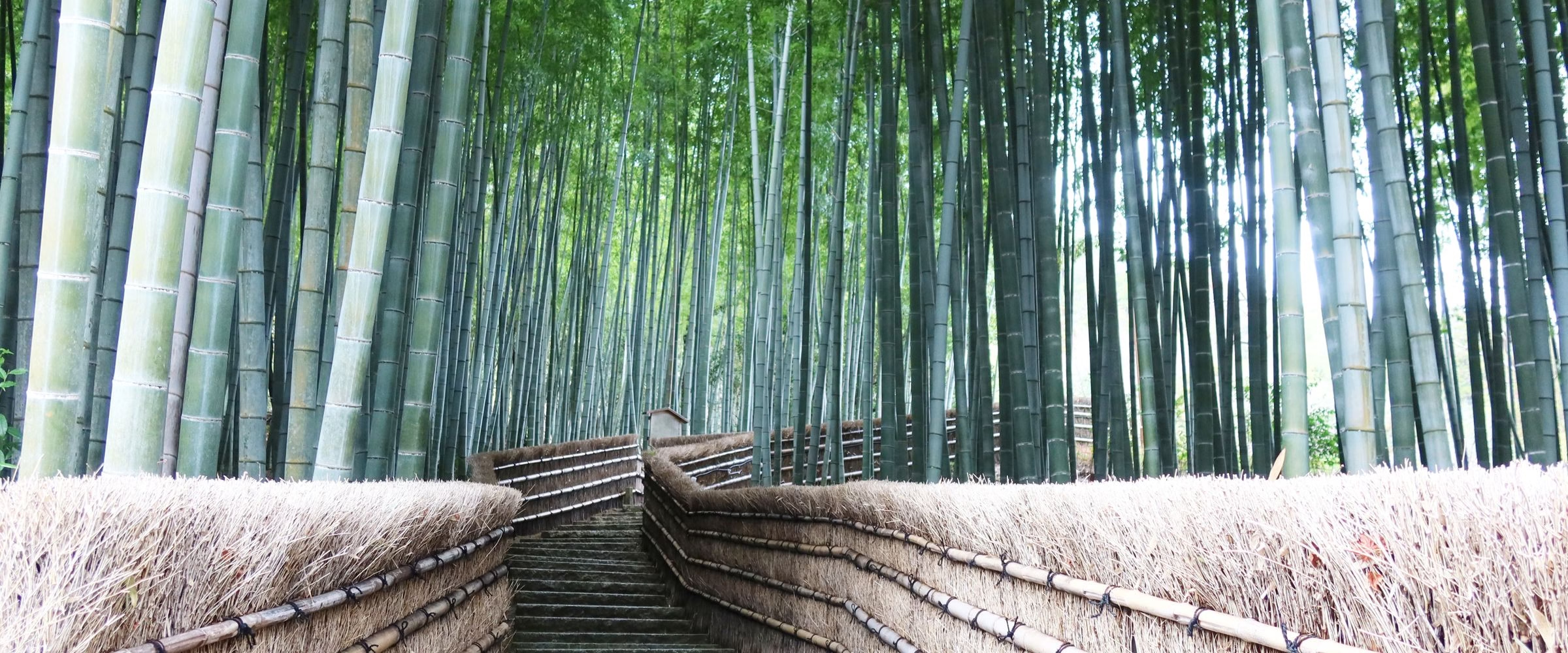
- Arashiyama Bamboo Grove at dawn before the crowds, then into the Tenryu-ji moss garden.
- Kinkaku-ji (Golden Pavilion) in early morning light — crowds arrive late; beauty arrives early.
- Philosopher’s Path canal walk in spring or autumn — a 2km stroll past temple gates and coffee shops.
The Culture & Craft Kyoto
Kyoto is the keeper of Japan’s traditional arts — lacquerware, ceramics, textile dyeing, tea ceremony, and the living tradition of the geiko and maiko. The craft runs deep.
- Gion district evening walk — Hanamikoji-dori is where geiko and maiko still move between appointments.
- Nishiki Market (‘Kyoto’s Kitchen’): a narrow 400-metre covered market of tsukemono pickles, matcha, and Kyoto-style deli foods.
- A formal tea ceremony at Urasenke or En tea house — the ritual is unlike anything in Western hospitality.
- Kyoto National Museum for the world’s finest collection of Japanese decorative arts.
- Nijo Castle’s nightingale floors — floorboards engineered to chirp under footsteps as a security measure.
The Slow Travel Kyoto
Kyoto rewards slowing down: a single temple district explored over an afternoon, one meal elevated to ceremony, the discipline of choosing two things and doing them completely.
- Kaiseki dinner at a Gion ryotei — Japan’s multi-course haute cuisine, where each dish is seasonal, local, and precisely arranged.
- A night at a traditional ryokan — futon on tatami, yukata robes, and a private onsen if budget allows.
- Cycle the Fushimi sake district and taste nihonshu (sake) at the breweries in Fushimi-ku.
- Morning zazen meditation at Shunkoin Temple — English-speaking monk guides, no experience needed.
- Kurama Onsen: a mountain hot spring village 30 minutes from the city — forest steam and cedar baths.
When to Go
Spring
Mar – May
- Cherry blossom (sakura) season — late March to mid-April — is Kyoto’s most celebrated time, with Maruyama Park and the Philosopher’s Path reaching peak beauty.
- Temperatures 10–22°C; long golden-hour evenings and perfect conditions for temple gardens.
- This is Kyoto’s busiest season — book accommodation 6 months ahead and purchase timed-entry tickets for Arashiyama in advance.
- Golden Week (late April–early May) brings significant domestic crowds; avoid or book exceptionally early.
Summer
Jun – Aug
- Kyoto summers are punishingly hot and humid — 35°C days with heat that feels trapped in the basin geography.
- June brings rainy season (tsuyu) — lush temple moss gardens hit their peak but outdoor exploration is soggy.
- The Gion Matsuri festival (July) is one of Japan’s greatest — elaborate float processions, yukata-clad crowds, and centuries of tradition.
- If visiting in summer, focus on river dining (kawayuka), early-morning temple visits, and air-conditioned museums.
Autumn
Sep – Nov
- Autumn foliage (koyo) from mid-November transforms Kyoto’s maple trees into a tapestry of red, amber, and gold.
- October is warm and clear — the ideal shoulder month with fewer crowds than spring.
- Tofukuji Temple and Eikan-do Shrine are the peak foliage destinations; expect queues but extraordinary colour.
- Temperatures 8–20°C; layering is key as mornings are crisp and afternoons warm.
Winter
Dec – Feb
- Kyoto’s quietest and most atmospheric season — crowds thin dramatically and temple gardens feel private.
- Occasional snow transforms the golden pavilion and bamboo grove into something otherworldly.
- Temperatures 3–10°C; cold but manageable with layers — rarely harsh enough to close attractions.
- New Year (Oshōgatsu) is deeply traditional in Kyoto — temple bell-ringing at midnight and first shrine visits are unforgettable.
Top Experiences

Fushimi Inari-taisha & the Mountain Trails
Why Go?
The image of thousands of vermillion torii gates winding up a forested mountain is one of the most iconic in all of Asia — and the reality is even better. Fushimi Inari is free, open 24 hours, and extends far beyond the crowded lower gates into a 4-hour mountain hike through cedar forest and smaller shrines. Most visitors turn back after 20 minutes; the mountain rewards those who continue.
Best For
Anyone willing to set an alarm — the lower gates before 7am are as close to serene as a famous landmark gets, and the upper trails are nearly always uncrowded.
Don’t Miss
The Yotsutsuji intersection halfway up — the first panoramic view over Kyoto appears here, and the crowds thin dramatically beyond this point.
Arashiyama: Bamboo, Temples & the River
Why Go?
Arashiyama is Kyoto’s western edge and its most dramatically beautiful district — a bamboo grove that filters light into something green and otherworldly, Tenryu-ji’s garden designed around a borrowed view of the mountains, and the Oi River where cormorant fishermen still work by torchlight. It’s crowded at midday and extraordinary at dawn.
Best For
Photographers, nature lovers, and anyone who wants to cover multiple iconic experiences in a single morning.
Don’t Miss
Okochi-Sanso Villa — an actor’s private estate garden with panoramic views, overlooked by most visitors who walk straight to the bamboo grove.

Higashiyama Historic District
Why Go?
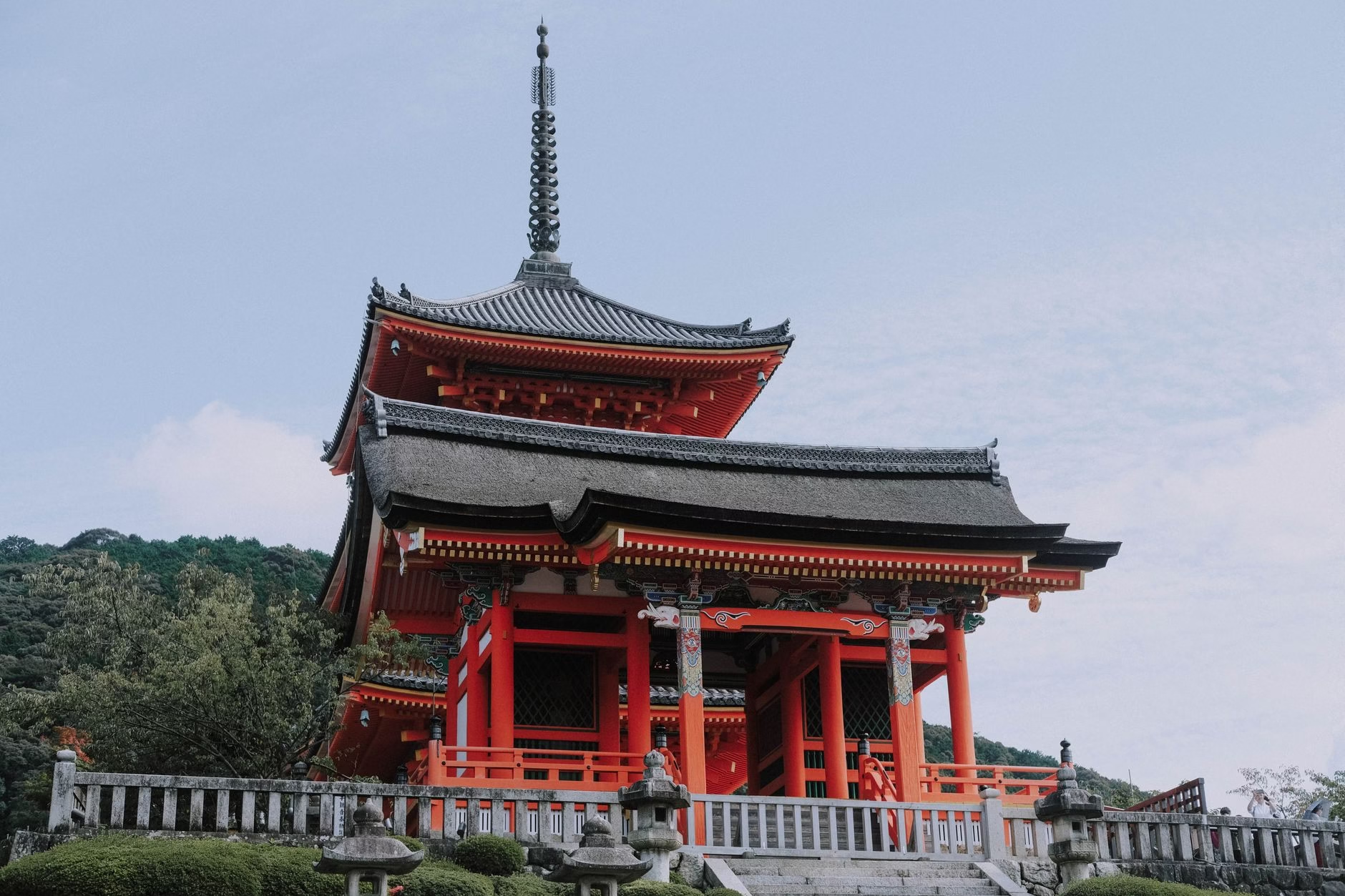
Kyoto’s most intact historic streetscape runs south from Gion through the lantern-lit lanes of Ninenzaka and Sannenzaka — cobbled alleys, wooden machiya townhouses converted into matcha cafes, and a succession of temples including Kiyomizudera, perched on a forested hillside above the city. The district rewards aimless wandering more than any pre-planned route.
Best For
First-timers who want to feel what medieval Kyoto looked like, and anyone drawn to traditional crafts, ceramics, and tea culture.
Don’t Miss
Kiyomizudera’s wooden stage platform — cantilevered over a 13m drop without a single nail, with a view across Kyoto that makes the climb worthwhile.
Food & Drink
Kyoto cuisine (Kyo-ryori) is defined by restraint, seasonality, and extraordinary ingredient quality — the opposite of Tokyo’s intensity. Temple vegetarian food (shojin-ryori), kaiseki multi-course meals, and Nishiki Market’s pickled everything reflect a city that values how food is prepared and presented as much as how it tastes. Budget well for food here — the best experiences require it.
Know the Neighbourhoods
Gion
Traditional geiko district
Best for: Evening walks on Hanamikoji-dori, ochaya (teahouse) facades, and the best people-watching in Japan. Restaurants here are expensive and often reservation-only.
Higashiyama
Historic cobbled lanes
Best for: Temple hopping, traditional crafts, matcha soft-serve, and the most intact historical streetscape in Kyoto. Gets crowded midday — visit early or at dusk.
Arashiyama
Bamboo & riverside temples
Best for: A half-day exploring the bamboo grove, Tenryu-ji garden, the monkey park, and the Oi River banks. Western Kyoto at its most scenic and atmospheric.
Fushimi
Sake breweries & shrine gates
Best for: The torii gate mountain trail, sake tasting at Gekkeikan and Kizakura breweries, and a more local, less tourist-facing Kyoto experience.
Getting There & Around
Getting There
Getting Around
Respect the Culture, Fit Right In
Temple & Shrine Protocol
- Purify hands at the temizuya (water basin) before entering a shrine.
- Bow twice, clap twice, bow once at the main shrine building — the standard prayer sequence.
- Many temples prohibit photography inside buildings — look for signs and follow them.
- Keep voices low and movement deliberate in active worship spaces.
Dining Etiquette
- Say ‘itadakimasu’ before eating and ‘gochisosama deshita’ when finished — Kyoto restaurants appreciate it.
- Tipping is not customary in Japan — it can cause confusion or mild offence.
- Walking and eating simultaneously is considered impolite — find a bench or eat at the stall.
- Chopsticks should never be passed directly from set to set — this mirrors a funeral rite.
Gion Etiquette
- Do not photograph or approach geiko and maiko in the streets — they are working professionals, not tourist attractions.
- Several Gion alleys now fine residents for misbehaviour toward residents — signs make the rules clear.
- Eating, drinking, and loud behaviour on Hanamikoji-dori is increasingly restricted.
- The best geiko sightings happen between 5:30pm and 7pm when they travel to engagements.
Public Spaces
- Rubbish bins are almost non-existent in public — carry a small bag and bin waste at your accommodation or convenience store.
- Quiet in queues is the norm — no pushing, no reserving spots, no loudness.
- Remove shoes before entering most traditional restaurants, ryokan, and home spaces.
- The left side of escalators is for standing in Kyoto (opposite to Tokyo) — keep right for walking.
Travel Tips
Frequently Asked Questions
When is the best time to visit Kyoto?
Do Canadians need a visa to visit Kyoto?
What currency is used in Kyoto?
What is the easiest way to get around Kyoto?
What cultural customs should visitors know before going to Kyoto?
Ready to Discover Kyoto?
Kyoto rewards depth over speed — the right itinerary makes all the difference between tourist and traveller. Our Japan specialists will help you time your visit, secure the right accommodation, and find the experiences most visitors miss.