


Seoul moves at a pace that feels genuinely electric — a city of 10 million people where a centuries-old royal palace sits in the shadow of glass towers, and where the world’s most obsessively curated street food coexists with three-Michelin-star dining. South Korea’s capital is one of Asia’s great surprises: fiercely modern on the surface, deeply traditional underneath, and almost aggressively welcoming to anyone curious enough to explore beyond the obvious.
Capital
Seoul, South Korea
Currency
Korean Won (₩)
Language
Korean
Timezone
KST — UTC+9
Best Season
Apr–Jun, Sep–Nov
Visa
K-ETA required for Canadians — apply online before travel (90-day stay)
Seoul for Every Travel Style
The Culture & History Seoul
Five grand palaces, ancient fortress walls, a UNESCO-listed village, and a pop culture phenomenon that’s conquered the world — Seoul rewards anyone who wants to go deep.
- Gyeongbokgung Palace at opening time — arrive early to watch the changing of the guard ceremony.
- Bukchon Hanok Village: 900-year-old tile-roof homes now used as cafes, guesthouses, and galleries.
- The War Memorial of Korea — moving, comprehensive, and essential context for the city.
- Inwangsan Shamanist shrine hike: shaman rituals still performed here above the city.
- Namsan Hanok Village for traditional crafts demonstrations and panoramic city views.
The Foodie’s Seoul
Korean cuisine is one of the world’s great food cultures — fermented, spicy, communal, and extraordinarily diverse. Seoul is where you eat it at its finest and most chaotic.
- Gwangjang Market: Seoul’s oldest market and the definitive street food experience — bindaetteok, mayak gimbap, and raw skate fish.
- Korean BBQ in Mapo-gu: charcoal-grilled pork belly with ssamjang, perilla leaves, and soju at a packed local joint.
- Noryangjin Fish Market for dawn tuna auctions and breakfast sashimi straight from the source.
- Dongdaemun’s 24-hour food stalls — the city that never eats in shifts.
- Insadong’s traditional tteok (rice cake) shops and artisan makgeolli bars.
Seoul After Dark
Seoul’s nightlife runs on a schedule that starts at midnight and doesn’t end until the subway opens at 5:30am. Hongdae, Itaewon, and Gangnam each offer completely different energy.
- Hongdae: student-driven, indie music, street performances, and clubs that feel genuinely underground.
- Itaewon: Seoul’s most international neighbourhood — diverse bars, rooftop venues, LGBTQ+-friendly spots.
- Karaoke (norebang) in your own private room — a Korean institution and unmissable at any hour.
- Han River night picnics with convenience store fried chicken and canned beer — the local favourite.
- The Naksan Park ridge walk at night: Seoul’s neon skyline spread out below the old city wall.
When to Go
Spring
Mar – May
- Cherry blossom season (late March–mid April) is extraordinary — Yeouido and Gyeongbokgung Palace turn pink almost overnight.
- Temperatures 8–22°C, clear skies, and the city at its most photogenic.
- Spring is peak tourism season — book accommodation 2–3 months in advance for blossom weeks.
- May brings warm weather and the Seoul International Fireworks Festival.
Summer
Jun – Aug
- July and August bring the monsoon (jangma) — intense humidity and heavy daily rainfall.
- Temperatures regularly reach 33–36°C with heat index values far higher.
- Rooftop bars, air-conditioned shopping malls, and Han River evenings keep locals sane.
- If visiting in summer, lean into the food scene — Koreans eat spicy cold noodles (naengmyeon) and army stew (budae jjigae) to beat the heat.
Autumn
Sep – Nov
- Widely considered Seoul’s best season — crisp air, stunning foliage, and festival season in full swing.
- October is the sweet spot: 12–20°C, low humidity, and the mountain parks ablaze with colour.
- Bukhansan National Park within the city limits offers spectacular autumn hiking.
- The Seoul Lantern Festival on Cheonggyecheon Stream (November) is a highlight of the calendar.
Winter
Dec – Feb
- Seoul winters are cold and dry — temperatures regularly drop to -10°C at night in January.
- Snow occasionally dusts the palaces, creating magical photo opportunities.
- Ski resorts (Vivaldi Park, High1) are 90–120 minutes from the city — a popular day trip.
- Indoor Seoul thrives: jimjilbang (Korean saunas), hotpot restaurants, and the vast underground shopping malls.
Top Experiences

Gyeongbokgung Palace & Bukchon Hanok Village
Why Go?
Gyeongbokgung is the grandest of Seoul’s five Joseon-dynasty palaces — a complex of 500-year-old throne halls, lotus ponds, and pavilions that somehow survived Japanese occupation and the Korean War. The adjacent Bukchon Hanok Village is a living neighbourhood of traditional homes that has become one of Asia’s most photographed streets.
Best For
History lovers, photographers, and anyone who wants to understand the Korea that existed before the 20th century reshaped everything.
Don’t Miss
The Gyeonghoeru Pavilion reflected in its lotus pond at golden hour — and renting a hanbok at the palace gate to get in free.

Dongdaemun Design Plaza & Cheonggyecheon Stream
Why Go?
Zaha Hadid’s Dongdaemun Design Plaza is Seoul’s most audacious piece of architecture — a fluid, meteorite-like structure that houses galleries, exhibitions, and a rooftop garden. Directly nearby, the Cheonggyecheon Stream is an 11km urban waterway reclaimed from a highway overpass, now lined with walking paths, art installations, and evening lantern festivals.
Best For
Design and architecture enthusiasts, urban explorers, and anyone who wants to see what Seoul looks like when it decides to invest in public space.
Don’t Miss
Walking the Cheonggyecheon from source to the Gwangjang Market stretch at dusk — the light on the water and the city buzzing above is one of Seoul’s defining experiences.
Bukhansan National Park
Why Go?
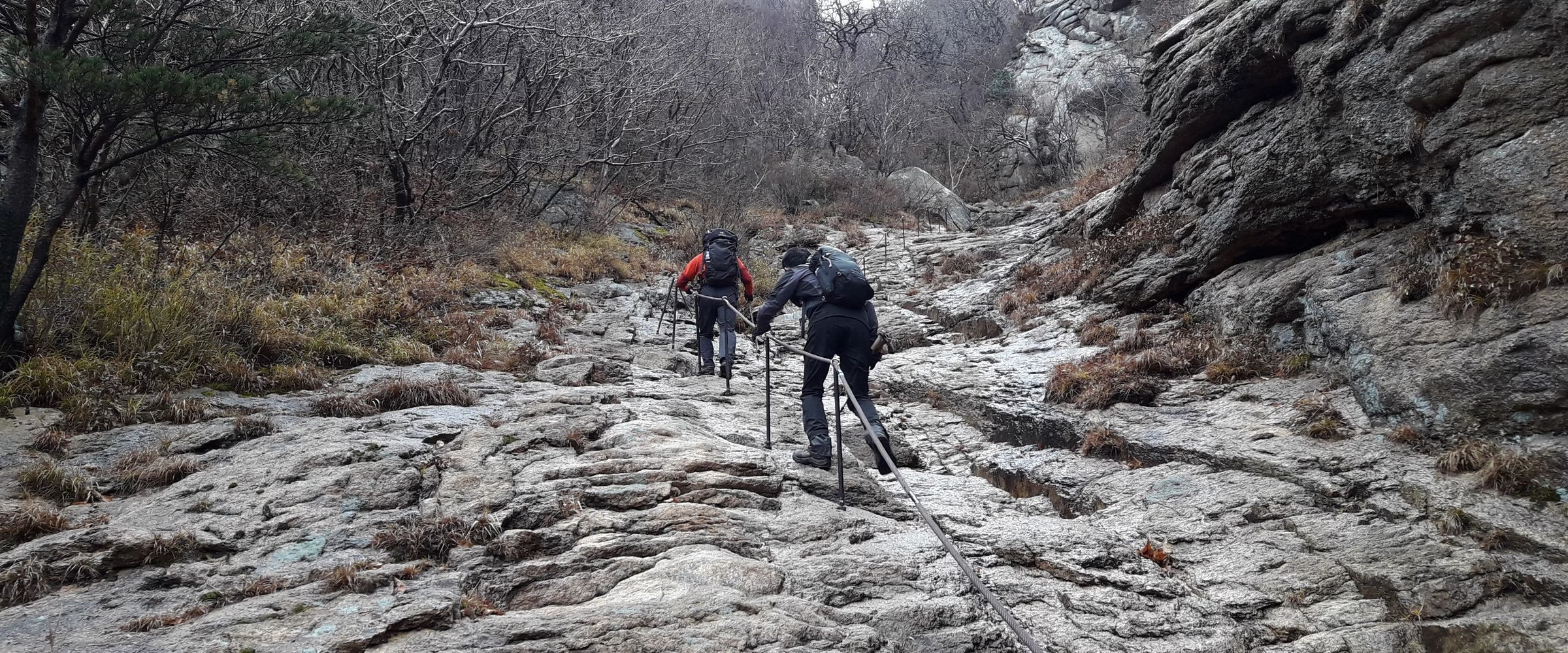
The fact that a full wilderness national park sits within Seoul’s city limits tells you something about how the city was built. Bukhansan’s granite peaks rise to 836m, dotted with Buddhist temples, fortress walls, and trails that range from easy walks to genuine rock scrambles. On a clear autumn day, the views over the Han River basin are extraordinary.
Best For
Active travellers, hikers, and anyone needing a reset from the city’s intensity — all reachable by subway.
Don’t Miss
The Baegundae Peak trail to the summit — the granite slabs near the top require cable-assisted climbing and the panorama reward is worth every metre.
Food & Drink
Korean food is built around the concept of balance — between spicy and cooling, fermented and fresh, communal and individual. A Seoul meal almost always arrives as a spread of banchan (small side dishes) surrounding a central protein, and the expectation is that you’ll share, refill, and stay a while. From temple food to late-night pojangmacha street stalls, the city eats extraordinarily well.
Know the Neighbourhoods
Insadong
Traditional arts & teahouses
Best for: Galleries, calligraphy shops, traditional tteok, and the Ssamziegil courtyard marketplace. Seoul’s most curated neighbourhood for craft and culture.
Hongdae
Youth culture & indie music
Best for: Street art murals, live music venues, vintage clothing, and the restaurant alley. The neighbourhood that launched K-indie and stays up until dawn.
Gangnam
Upscale modern Seoul
Best for: High-end dining, luxury shopping on Apgujeong Rodeo Street, and the COEX Mall underground city. The neighbourhood the song made famous.
Itaewon
International & eclectic
Best for: Seoul’s most diverse food scene (Lebanese, Mexican, Ethiopian, and more), LGBTQ+-friendly bars, vintage stores, and the antiques market on Itaewon-daero.
Getting There & Around
Getting There
Getting Around
Respect the Culture, Fit Right In
Dining Etiquette
- Wait for the eldest person to sit and begin eating before you start.
- Pour drinks for others — never pour your own glass.
- Use both hands when giving or receiving food, drinks, or payment.
- Don’t stick chopsticks upright in rice — this mirrors funeral rites.
Public Behaviour
- Priority seating on the subway is genuinely reserved — even if it’s empty, avoid sitting there.
- Talking on the phone in a loud voice on public transport is considered rude.
- Remove shoes before entering homes, traditional restaurants, and many temples.
- Bowing is the standard greeting — a slight nod for casual encounters, deeper for elders.
Temples & Palaces
- Dress modestly — shoulders and knees covered is appreciated at Buddhist temples.
- Many palace grounds close for ceremonies — check schedules online before visiting.
- Photography is generally welcome but check for ‘no photography’ signs in palace interiors.
- Speak quietly and move slowly in active temple spaces — monks may be in meditation.
Money & Tipping
- Korea is largely cashless — T-money cards and Kakao Pay work everywhere.
- Tipping is not customary and can occasionally be seen as mildly offensive.
- Convenience stores (GS25, CU, 7-Eleven) are everywhere and sell surprisingly good food.
- Currency exchange is best done at the airport or bank — avoid hotel desks.
Travel Tips
Frequently Asked Questions
When is the best time to visit Seoul?
Do Canadians need a visa to visit Seoul?
What currency is used in Seoul?
What is the easiest way to get around Seoul?
What cultural customs should visitors know before going to Seoul?
Ready to Explore Seoul?
Our travel specialists know South Korea deeply — from cherry blossom timing to the best neighbourhood for your travel style. Let us build a Seoul itinerary that goes well beyond the obvious.