


Messina is the city most travellers pass through on the way somewhere else — and that’s exactly why it rewards those who stop. Perched on the northeastern tip of Sicily, looking across two kilometres of water to mainland Italy, this is a city shaped by earthquakes, mythology, and the world’s most extraordinary swordfish. The Strait of Messina has history written into every stone — and the granita here might be the finest in all of Sicily.
City
Messina, Sicily, Italy
Currency
Euro (€)
Language
Italian (Sicilian dialect locally)
Timezone
CET — UTC+1 (CEST UTC+2 in summer)
Best Season
Apr–Jun, Sep–Oct
Visa
90 days visa-free (Schengen — Canadian passport)
Messina for Every Travel Style
The Foodie’s Messina
Sicilian cuisine is extraordinary; Messinese cuisine is extraordinary with fresh swordfish pulled from one of the world’s most fertile straits. This is a food destination that most travellers overlook entirely.
- Pesce spada alla messinese — the defining local dish. Order it at a waterfront trattoria.
- Granita con brioche for breakfast — almond, pistachio, or coffee. Better than anywhere else in Sicily.
- Ganzirri lagoon for mussels — eaten at the fishing shacks right on the water.
- Arancini from a proper rosticceria — Sicilian rice balls, larger and denser than Rome’s version.
- The Viale San Martino passeggiata with a cannolo — walk, eat, repeat.
The Island Hopper’s Base
Messina sits at the gateway to the Aeolian Islands — seven volcanic islands of extraordinary beauty, each with its own character. The city is the logical base for island hopping in the southern Tyrrhenian.
- Day trip to Stromboli — the active volcano visible from Messina’s waterfront.
- Hydrofoil to Lipari (45 min) for the finest beaches in the archipelago.
- Vulcano for the sulphur mud baths — pungent, therapeutic, unforgettable.
- The overnight ferry to Salina — wild capers, Malvasia wine, and Mimosa’s kitchen.
- Early morning ferry from Messina harbour — watch the strait at dawn from the deck.
Messina for Culture Seekers
A city rebuilt from rubble after 1908’s catastrophic earthquake, Messina carries its scars and its centuries with equal dignity. The Duomo’s astronomical clock and the Norman cathedral are monuments to what survived.
- The Duomo and its extraordinary astronomical clock — the noon performance is unmissable.
- Museo Regionale: Caravaggio’s ‘Adoration of the Shepherds’ and ‘Resurrection of Lazarus’, both painted in Messina.
- Fontana di Orione — the Renaissance fountain at the heart of the rebuilt city.
- The Falcata peninsula and the lighthouse at Capo Peloro.
- Crossing to Villa San Giovanni by ferry (20 min) for a different view of the strait.
When to Go
Spring
Mar – May
- April and May are perfect — warm sea breezes, wildflowers along the strait, and no crowds.
- The full schedule of Aeolian Islands ferries and hydrofoils is running from April.
- Almond and citrus trees in bloom across the Sicilian hills around the city.
- Low season prices with entirely normal tourist infrastructure.
Summer
Jun – Aug
- July and August are brutally hot — 36–40°C is common, and the strait amplifies humidity.
- Ferragosto (August) sees many local restaurants close as Italians take their annual holiday.
- Swordfish is at peak season in June and July — the best time for pesce spada.
- If you must visit in summer, the early morning and evening are manageable; avoid noon–5pm outdoors.
Autumn
Sep – Nov
- September is the finest month — warm sea, reduced crowds, full restaurant season still running.
- October brings cooler evenings and dramatic light on the strait.
- Some Aeolian Islands ferry routes reduce frequency after October.
- Pistachio and almond harvests bring exceptional ingredients to local markets.
Winter
Dec – Feb
- Mild by northern European standards (12–16°C) but wet and grey.
- Many tourist-facing businesses operate reduced hours or close entirely.
- A quieter, more authentic side of the city — locals only, lower prices.
- Good base for day trips by train along the Tyrrhenian coast.
Top Experiences
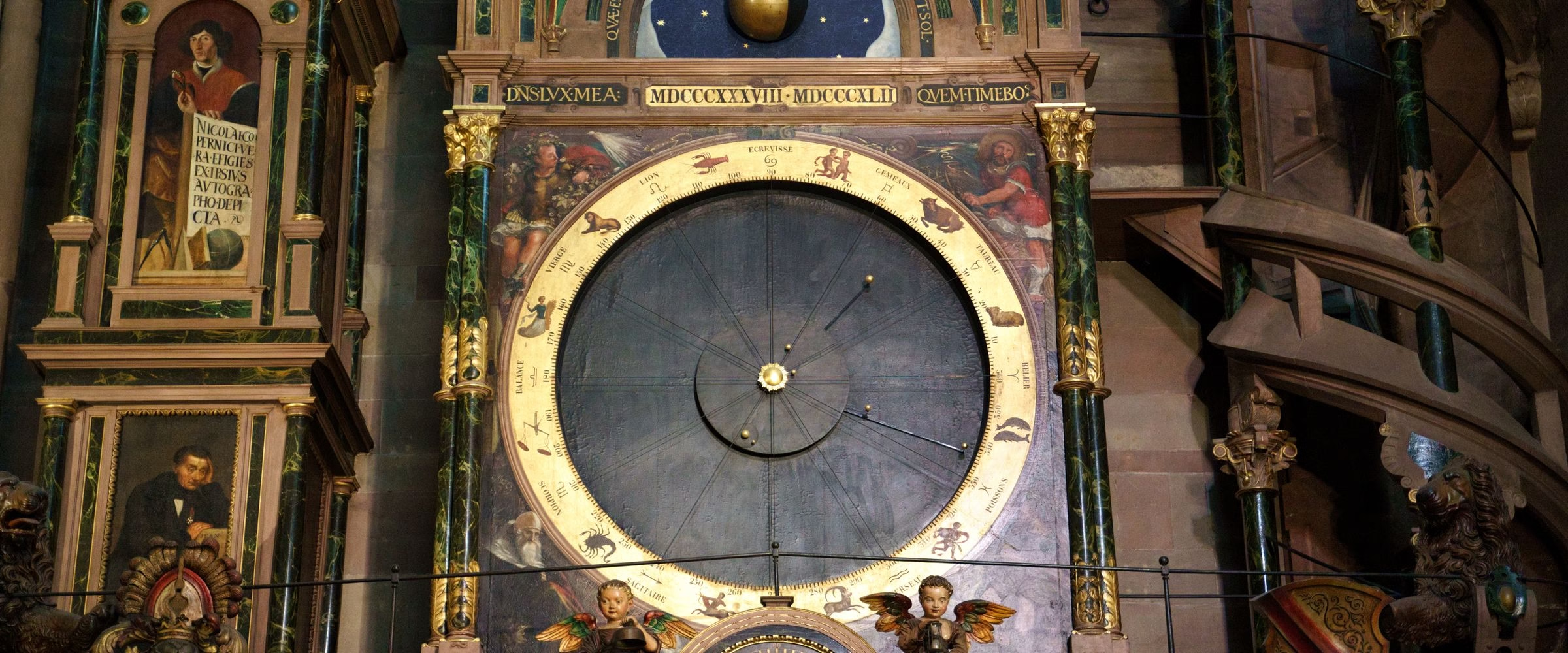
The Duomo & Astronomical Clock
Why Go?
Messina’s cathedral, rebuilt after the 1908 earthquake and 1943 bombing, contains one of the most extraordinary mechanical clocks in the world — a 60-metre tower that comes to life at noon each day with a parade of gilded automata, a crowing rooster, and a lion that roars over the city. The Norman-Byzantine interior is magnificent in its own right.
Best For
History lovers, clock enthusiasts, and anyone who enjoys spectacle with their sightseeing.
Don’t Miss
Arriving at 11:50am to watch the full noon performance of the clock tower — the whole sequence takes fifteen minutes and the entire city stops to watch.

The Strait of Messina & Capo Peloro
Why Go?
The Strait of Messina is where Homer’s Scylla and Charybdis lived — the mythological monsters representing the rocky shoal on the Sicilian side and the whirlpool on the Calabrian. Today the strait is where swordfish hunters still practice an ancient tradition from the prow of long, narrow fishing boats in summer, and where the two shores feel close enough to touch.
Best For
Mythology enthusiasts, sailors, and anyone captivated by the idea of a waterway that has shaped civilisations.
Don’t Miss
The view from Capo Peloro at the northern tip of Sicily — the point where the Tyrrhenian and Ionian seas meet, with the mainland visible across just two kilometres of water.

A Day Trip to the Aeolian Islands
Why Go?
Seven volcanic islands sitting in the Tyrrhenian Sea, a short hydrofoil ride from Messina’s harbour. Stromboli’s active volcano glows at night; Lipari has remarkable beaches and a hilltop citadel; Vulcano offers sulphur mud baths you’ll smell for days. No other Italian city has this on its doorstep.
Best For
Adventure travellers, beach lovers, and anyone who wants to tick off a UNESCO World Heritage site before lunch.
Don’t Miss
Taking the evening hydrofoil back to Messina after watching Stromboli erupt at dusk — the glowing lava stream visible from the boat is one of the great natural spectacles of southern Italy.
Food & Drink
Messina has one of Sicily’s most distinctive food cultures — shaped by the Mediterranean at its richest, by Arab and Norman influences, and by the extraordinary produce of the strait. Swordfish here isn’t a menu option; it’s a civic identity.
Know the Neighbourhoods
Centro Storico
Rebuilt Baroque — grand boulevards after the 1908 earthquake
Best for: The Duomo, main piazzas, evening passeggiata
- Piazza del Duomo with the cathedral and astronomical clock at its centre.
- Fontana di Orione — the finest Renaissance fountain in Sicily.
- Corso Cavour for the evening passeggiata — Messina at its most social.
Ganzirri
Fishing village on the lagoon — slow, local, exceptional seafood
Best for: Mussel farming, lakeside dining, an escape from the rebuilt city
- The lagoon mussel farms — visible from the waterfront restaurants.
- Informal seafood shacks where mussels are eaten straight from the water.
- Capo Peloro lighthouse and the view across to Calabria.
Viale San Martino
The everyday city — shopping, bars, local life
Best for: Aperitivo culture, people-watching, everyday Messinese life
- The main commercial street; locals shop here, tourists rarely come.
- Best graniterias and pasticcerie are on or just off this boulevard.
- Evening aperitivo from 6pm — spritz, olives, arancini.
Annunziata
University district — young, relaxed, affordable
Best for: Budget dining, student bars, a more youthful side of the city
- University of Messina campus and surrounding cafés and osterie.
- Cheapest and most authentic student restaurants in the city.
- Less visited by tourists — genuinely local atmosphere throughout.
Getting There & Around
Getting There
Getting Around
Respect the Culture, Fit Right In
Dining & Coffee
- Espresso at the bar is the Sicilian norm — standing, fast, and invariably excellent.
- Cappuccino after lunch is still considered unusual; order a macchiato if you want something longer.
- Lunch is sacred (1–4pm) and many family restaurants close mid-afternoon; plan around it.
- Sicilians eat dinner late — 9–10pm is perfectly normal; restaurants fill after that.
- The coperto (cover charge) appears on most restaurant bills; check the menu so it’s not a surprise.
Church Etiquette
- Cover shoulders and knees before entering any church — this is enforced, not suggested.
- The Duomo is an active place of worship; avoid visiting during mass services.
- Photography inside churches is often restricted — look for signs and follow them without exception.
- Leave something in the collection if you spend time in a church; entrance is almost always free.
- Many Sicilian churches have irregular opening hours; check locally or arrive by 10am to be safe.
Everyday Etiquette
- Sicilians are warm and demonstrative — a greeting involves handshakes and often cheek kisses between acquaintances.
- Punctuality is relaxed; arriving slightly late to any social occasion is normal and expected.
- Complimenting the food to the cook or restaurant owner is warmly appreciated and culturally expected.
- Tipping is not obligatory; leaving a euro or two per person in cash is appreciated and sufficient.
- Sicilian dialect is distinct from standard Italian — don’t worry if you catch words you don’t recognise.
Getting Around
- The ferry to Villa San Giovanni runs continuously — it’s a short crossing, not a tourist attraction, but treat it as one.
- Driving in Messina is chaotic; pedestrians and scooters share rules that are more suggestions than laws.
- Validate bus tickets before boarding; inspectors do check and fines are immediate.
- The harbour area is safe to walk at any time of day; exercise normal urban awareness at night.
- Hydrofoil and ferry tickets to the Aeolian Islands sell out in summer — book ahead, especially for Stromboli.
Travel Tips
Frequently Asked Questions
When is the best time to visit Messina?
Do Canadians need a visa to visit Messina?
What currency is used in Messina?
What is the easiest way to get around Messina?
What cultural customs should visitors know before going to Messina?
Ready to discover Messina?
Messina is one of Italy’s most overlooked cities — a place with extraordinary food, world-class art, and the best access to the Aeolian Islands anywhere in Sicily. At Fly Away Travel Co., we build southern Italy itineraries that go beyond the usual stops. Contact us and let’s start planning.